


Page 93 - The Art of Designing Embedded Systems
P. 93
80  THE ART OF  DESIGNING EMBEDDED SYSTEMS


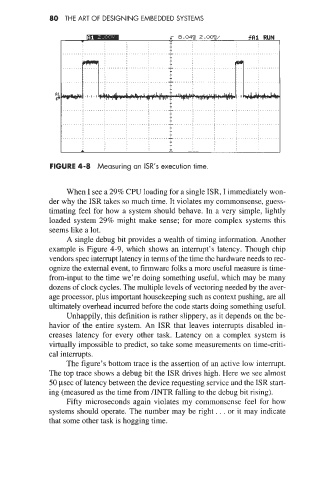
               FIGURE 4-8  Measuring an ISR’s  execution time.


                   When I see a 29% CPU loading for a single ISR, I immediately won-
              der why the ISR takes so much time. It violates my commonsense, guess-
              timating feel for how  a system should behave.  In a very  simple, lightly
              loaded  system 29%  might  make  sense; for more complex  systems this
               seems like a lot.
                   A single debug bit provides a wealth of timing information. Another
              example is Figure 4-9, which shows an interrupt’s latency. Though chip
              vendors spec interrupt latency in terms of the time the hardware needs to rec-
              ognize the external event, to firmware folks a more useful measure is time-
              from-input to the time we’re doing something useful, which may be many
              dozens of clock cycles. The multiple levels of vectoring needed by the aver-
              age processor, plus important housekeeping such as context pushing, are all
              ultimately overhead incurred before the code starts doing something useful.
                   Unhappily, this definition is rather slippery, as it depends on the be-
              havior  of  the entire system. An ISR  that leaves interrupts disabled in-
              creases latency  for every  other task.  Latency  on  a  complex  system is
              virtually impossible to predict, so take some measurements on time-criti-
              cal interrupts.
                   The figure’s bottom trace is the assertion of an active low interrupt.
              The top trace shows a debug bit the ISR drives high. Here we see almost
              50 psec of latency between the device requesting service and the ISR start-
              ing (measured as the time from /INTR falling to the debug bit rising).
                   Fifty microseconds  again violates my commonsense feel for how
              systems should operate. The number may be right. . . or it may indicate
              that some other task is hogging time.

