


Page 94 - The Art of Designing Embedded Systems
P. 94
Real  Time Means Right Now!  81


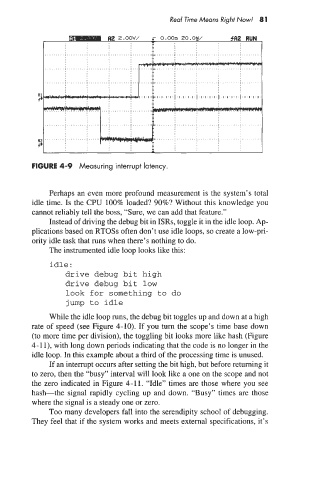
          FIGURE 4-9  Measuring interrupt latency.


               Perhaps an even more profound measurement is the system’s total
          idle time. Is the CPU  100% loaded? 90%? Without this knowledge you
          cannot reliably tell the boss, “Sure, we can add that feature.”
               Instead of driving the debug bit in ISRs, toggle it in the idle loop. Ap-
          plications based on RTOSs often don’t use idle loops, so create a low-pri-
          ority idle task that runs when there’s nothing to do.
               The instrumented idle loop looks like this:

               idle :
                   drive debug bit high
                   drive debug bit  low
                   look for something to do
                   jump to idle
               While the idle loop runs, the debug bit toggles up and down at a high
          rate of speed (see Figure 4-10). If you turn the scope’s time base down
          (to more time per division), the toggling bit looks more like hash (Figure
          4-1 l), with long down periods indicating that the code is no longer in the
          idle loop. In this example about a third of the processing time is unused.
               If an interrupt occurs after setting the bit high, but before returning it
          to zero, then the “busy” interval will look like a one on the scope and not
          the zero indicated in Figure 4-11. “Idle” times are those where you see
          hash-the   signal rapidly cycling up  and down. “Busy” times are those
          where the signal is a steady one or zero.
               Too many developers fall into the serendipity school of debugging.
          They feel that if the system works and meets external specifications, it’s

