


Page 111 - The CNN Effect in Action - How the News Media Pushed the West toward War ini Kosovo
P. 111
1403975191ts06.qxd  21-2-07  06:29 PM  Page 85
                                                                                                                  85
                                                                               THE MEDIA DURING THE KOSOVO CRISIS
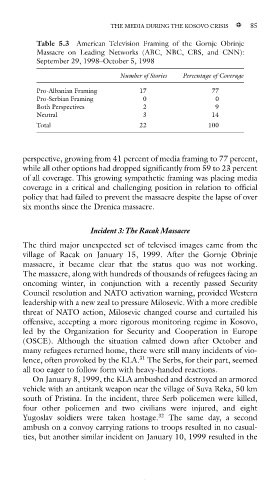
                                                            Table 5.3 American Television Framing of the Gornje Obrinje
                                                            Massacre on Leading Networks (ABC, NBC, CBS, and CNN):
                                                            September 29, 1998–October 5, 1998
                                                                                                 Percentage of Coverage
                                                                                 Number of Stories
                                                                                                        77
                                                                                      17
                                                            Pro-Albanian Framing
                                                                                                         0
                                                                                       0
                                                            Pro-Serbian Framing
                                                                                       2
                                                            Both Perspectives
                                                                                                         9
                                                            Neutral
                                                                                       3
                                                                                                        14
                                                            Total
                                                                                      22
                                                                                                       100
                                                         perspective, growing from 41 percent of media framing to 77 percent,
                                                         while all other options had dropped significantly from 59 to 23 percent
                                                         of all coverage. This growing sympathetic framing was placing media
                                                         coverage in a critical and challenging position in relation to official
                                                         policy that had failed to prevent the massacre despite the lapse of over
                                                         six months since the Drenica massacre.
                                                                          Incident 3:The Racak Massacre
                                                         The third major unexpected set of televised images came from the
                                                         village of Racak on January 15, 1999. After the Gornje Obrinje
                                                         massacre, it became clear that the status quo was not working.
                                                         The massacre, along with hundreds of thousands of refugees facing an
                                                         oncoming winter, in conjunction with a recently passed Security
                                                         Council resolution and NATO activation warning, provided Western
                                                         leadership with a new zeal to pressure Milosevic. With a more credible
                                                         threat of NATO action, Milosevic changed course and curtailed his
                                                         offensive, accepting a more rigorous monitoring regime in Kosovo,
                                                         led by the Organization for Security and Cooperation in Europe
                                                         (OSCE). Although the situation calmed down after October and
                                                         many refugees returned home, there were still many incidents of vio-
                                                                                      31
                                                         lence, often provoked by the KLA. The Serbs, for their part, seemed
                                                         all too eager to follow form with heavy-handed reactions.
                                                           On January 8, 1999, the KLA ambushed and destroyed an armored
                                                         vehicle with an antitank weapon near the village of Suva Reka, 50 km
                                                         south of Pristina. In the incident, three Serb policemen were killed,
                                                         four other policemen and two civilians were injured, and eight
                                                         Yugoslav soldiers were taken hostage. 32  The same day, a second
                                                         ambush on a convoy carrying rations to troops resulted in no casual-
                                                         ties, but another similar incident on January 10, 1999 resulted in the

