


Page 115 - The CNN Effect in Action - How the News Media Pushed the West toward War ini Kosovo
P. 115
1403975191ts06.qxd  21-2-07  06:29 PM  Page 89
                                                                               THE MEDIA DURING THE KOSOVO CRISIS
                                                             100
                                                              90
                                                              80
                                                              70
                                                              60
                                                            Percent
                                                              50
                                                              40
                                                              30
                                                              20
                                                              10
                                                               0
                                                                                    Gornje Obrinje
                                                                      Drenica
                                                                              Neutral
                                                                              Both Perspectives
                                                                                              Pro Albanian
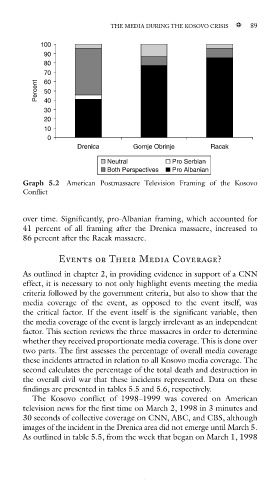
                                                         Graph 5.2 American Postmassacre Television Framing of the Kosovo
                                                         Conflict
                                                         over time. Significantly, pro-Albanian framing, which accounted for
                                                         41 percent of all framing after the Drenica massacre, increased to
                                                         86 percent after the Racak massacre.  Pro Serbian  Racak  89
                                                                  Events or Their Media Coverage?
                                                         As outlined in chapter 2, in providing evidence in support of a CNN
                                                         effect, it is necessary to not only highlight events meeting the media
                                                         criteria followed by the government criteria, but also to show that the
                                                         media coverage of the event, as opposed to the event itself, was
                                                         the critical factor. If the event itself is the significant variable, then
                                                         the media coverage of the event is largely irrelevant as an independent
                                                         factor. This section reviews the three massacres in order to determine
                                                         whether they received proportionate media coverage. This is done over
                                                         two parts. The first assesses the percentage of overall media coverage
                                                         these incidents attracted in relation to all Kosovo media coverage. The
                                                         second calculates the percentage of the total death and destruction in
                                                         the overall civil war that these incidents represented. Data on these
                                                         findings are presented in tables 5.5 and 5.6, respectively.
                                                           The Kosovo conflict of 1998–1999 was covered on American
                                                         television news for the first time on March 2, 1998 in 3 minutes and
                                                         30 seconds of collective coverage on CNN, ABC, and CBS, although
                                                         images of the incident in the Drenica area did not emerge until March 5.
                                                         As outlined in table 5.5, from the week that began on March 1, 1998

