


Page 211 - Bruce Ellig - The Complete Guide to Executive Compensation (2007)
P. 211
Chapter 5. Salary                           197


                              $


                                                         5
                                                    4

                                               3                 1
                                                           or
                                          2
                                    1


                                               Job Value
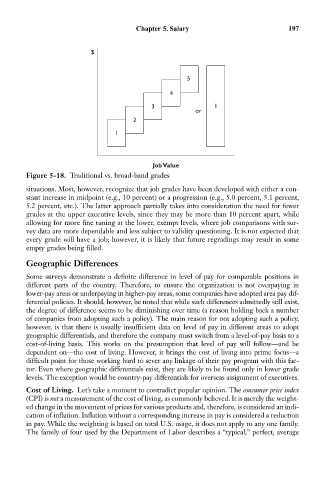
           Figure 5-18. Traditional vs. broad-band grades
           situations. Most, however, recognize that job grades have been developed with either a con-
           stant increase in midpoint (e.g., 10 percent) or a progression (e.g., 5.0 percent, 5.1 percent,
           5.2 percent, etc.). The latter approach partially takes into consideration the need for fewer
           grades at the upper executive levels, since they may be more than 10 percent apart, while
           allowing for more fine tuning at the lower, exempt levels, where job comparisons with sur-
           vey data are more dependable and less subject to validity questioning. It is not expected that
           every grade will have a job; however, it is likely that future regradings may result in some
           empty grades being filled.

           Geographic Differences
           Some surveys demonstrate a definite difference in level of pay for comparable positions in
           different parts of the country. Therefore, to ensure the organization is not overpaying in
           lower-pay areas or underpaying in higher-pay areas, some companies have adopted area pay dif-
           ferential policies. It should, however, be noted that while such differences admittedly still exist,
           the degree of difference seems to be diminishing over time (a reason holding back a number
           of companies from adopting such a policy). The main reason for not adopting such a policy,
           however, is that there is usually insufficient data on level of pay in different areas to adopt
           geographic differentials, and therefore the company must switch from a level-of-pay basis to a
           cost-of-living basis. This works on the presumption that level of pay will follow—and be
           dependent on—the cost of living. However, it brings the cost of living into prime focus—a
           difficult point for those working hard to sever any linkage of their pay program with this fac-
           tor. Even where geographic differentials exist, they are likely to be found only in lower grade
           levels. The exception would be country-pay differentials for overseas assignment of executives.
           Cost of Living. Let’s take a moment to contradict popular opinion. The consumer price index
           (CPI) is not a measurement of the cost of living, as commonly believed. It is merely the weight-
           ed change in the movement of prices for various products and, therefore, is considered an indi-
           cation of inflation. Inflation without a corresponding increase in pay is considered a reduction
           in pay. While the weighting is based on total U.S. usage, it does not apply to any one family.
           The family of four used by the Department of Labor describes a “typical,” perfect, average

