


Page 241 - The Engineering Guide to LEED-New Construction Sustainable Construction for Engineers
P. 241
214    Cha pte r  F i v e


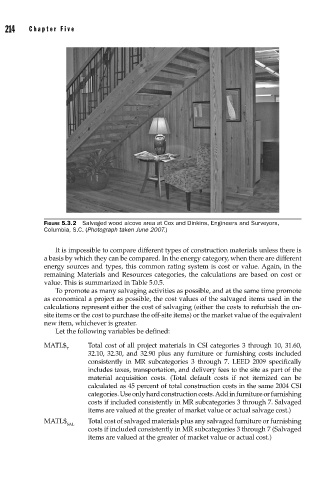
             FIGURE 5.3.2  Salvaged wood alcove area at Cox and Dinkins, Engineers and Surveyors,
             Columbia, S.C. (Photograph taken June 2007.)


                 It is impossible to compare different types of construction materials unless there is
             a basis by which they can be compared. In the energy category, when there are different
             energy sources and types, this common rating system is cost or value. Again, in the
             remaining Materials and Resources categories, the calculations are based on cost or
             value. This is summarized in Table 5.0.5.
                 To promote as many salvaging activities as possible, and at the same time promote
             as economical a project as possible, the cost values of the salvaged items used in the
             calculations represent either the cost of salvaging (either the costs to refurbish the on-
             site items or the cost to purchase the off-site items) or the market value of the equivalent
             new item, whichever is greater.
                 Let the following variables be defined:
             MATL$          Total cost of all project materials in CSI categories 3 through 10, 31.60,
                    T
                          32.10, 32.30, and 32.90 plus any furniture or furnishing costs included
                          consistently in MR subcategories 3 through 7. LEED 2009 specifically
                          includes taxes, transportation, and delivery fees to the site as part of the
                          material acquisition costs. (Total default costs if not itemized can be
                          calculated as 45 percent of total construction costs in the same 2004 CSI
                          categories. Use only hard construction costs. Add in furniture or furnishing
                          costs if included consistently in MR subcategories 3 through 7. Salvaged
                          items are valued at the greater of market value or actual salvage cost.)
             MATL$         Total cost of salvaged materials plus any salvaged furniture or furnishing
                    SAL
                          costs if included consistently in MR subcategories 3 through 7 (Salvaged
                          items are valued at the greater of market value or actual cost.)

