


Page 378 - Introduction to Statistical Pattern Recognition
P. 378
360                        Introduction to Statistical Pattern Recognition


                               r
                                4


                                       No Editing-    /


                                I //

                                0      .05    .IO    .I 5   .20    .25
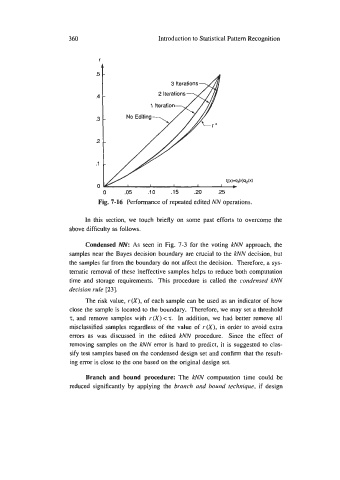
                               Fig. 7-16  Performance of repeated edited NN operations.

                           In  this  section, we  touch  briefly  on  some past  efforts to  overcome the
                      above difficulty as follows.

                           Condensed NN:  As  seen in  Fig. 7-3 for  the  voting  kNN  approach, the
                      samples near the Bayes decision boundary are crucial to the kNN decision, but
                      the samples far from the boundary do not affect the decision.  Therefore, a sys-
                      tematic removal of  these ineffective samples helps to reduce both computation
                      time  and  storage requirements.  This  procedure is  called  the  condensed  kNN
                      decision rule [23].
                           The risk value, r(X), of  each sample can be used as an indicator of  how
                      close the sample is located to the boundary.  Therefore, we may set a threshold
                      z,  and  remove  samples with  I' (X) < z.  In  addition, we  had  better remove all
                      misclassified samples regardless of  the value of  r(X), in  order to avoid extra
                      errors  as  was  discussed  in  the  edited  kNN  procedure.  Since  the  effect  of
                      removing samples on the kNN  error is hard to predict, it  is suggested to clas-
                      sify test samples based on the condensed design set and confirm that the result-
                      ing error is close to the one based on the original design set.

                           Branch  and  bound  procedure:  The  kNN  computation  time  could  be
                      reduced  significantly by  applying  the  brunch  and  bound  technique,  if  design

