


Page 379 - Accounting Information Systems
P. 379
350     PART II       Transaction Cycles and Business Processes

                         The General Ledger System

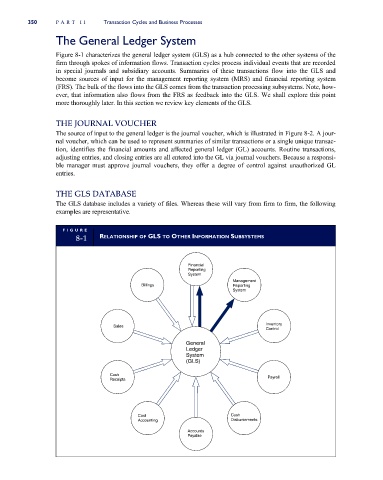
                         Figure 8-1 characterizes the general ledger system (GLS) as a hub connected to the other systems of the
                         firm through spokes of information flows. Transaction cycles process individual events that are recorded
                         in special journals and subsidiary accounts. Summaries of these transactions flow into the GLS and
                         become sources of input for the management reporting system (MRS) and financial reporting system
                         (FRS). The bulk of the flows into the GLS comes from the transaction processing subsystems. Note, how-
                         ever, that information also flows from the FRS as feedback into the GLS. We shall explore this point
                         more thoroughly later. In this section we review key elements of the GLS.


                         THE JOURNAL VOUCHER
                         The source of input to the general ledger is the journal voucher, which is illustrated in Figure 8-2. A jour-
                         nal voucher, which can be used to represent summaries of similar transactions or a single unique transac-
                         tion, identifies the financial amounts and affected general ledger (GL) accounts. Routine transactions,
                         adjusting entries, and closing entries are all entered into the GL via journal vouchers. Because a responsi-
                         ble manager must approve journal vouchers, they offer a degree of control against unauthorized GL
                         entries.


                         THE GLS DATABASE
                         The GLS database includes a variety of files. Whereas these will vary from firm to firm, the following
                         examples are representative.

                           FI GU RE
                               8-1    RELATIONSHIP OF GLS TO OTHER INFORMATION SUBSYSTEMS


                                                                 Financial
                                                                 Reporting
                                                                 System
                                                                              Management
                                                   Billings                   Reporting
                                                                              System


                                                                                        Inventory
                                          Sales
                                                                                        Control
                                                                General
                                                                Ledger
                                                                System
                                                                (GLS)
                                         Cash
                                         Receipts                                        Payroll


                                                  Cost                        Cash
                                                  Accounting                  Disbursements
                                                                 Accounts
                                                                 Payable

