


Page 304 - Air Pollution Control Engineering
P. 304
05_chap_wang.qxd  05/05/2004  3:51 pm  Page 283
                    Wet and Dry Scrubbing                                                     283


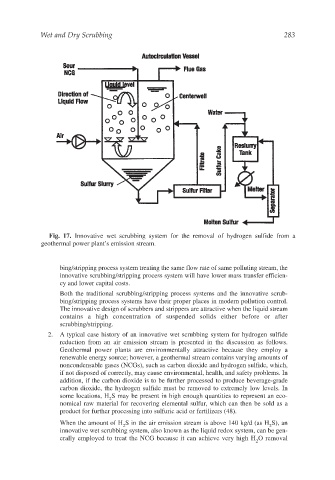
                       Fig. 17. Innovative wet scrubbing system for the removal of hydrogen sulfide from a
                     geothermal power plant’s emission stream.


                          bing/stripping process system treating the same flow rate of same polluting stream, the
                          innovative scrubbing/stripping process system will have lower mass transfer efficien-
                          cy and lower capital costs.
                          Both the traditional scrubbing/stripping process systems and the innovative scrub-
                          bing/stripping process systems have their proper places in modern pollution control.
                          The innovative design of scrubbers and strippers are attractive when the liquid stream
                          contains a high concentration of suspended solids either before or after
                          scrubbing/stripping.
                       2.  A typical case history of an innovative wet scrubbing system for hydrogen sulfide
                          reduction from an air emission stream is presented in the discussion as follows.
                          Geothermal power plants are environmentally attractive because they employ a
                          renewable energy source; however, a geothermal stream contains varying amounts of
                          noncondensable gases (NCGs), such as carbon dioxide and hydrogen sulfide, which,
                          if not disposed of correctly, may cause environmental, health, and safety problems. In
                          addition, if the carbon dioxide is to be further processed to produce beverage-grade
                          carbon dioxide, the hydrogen sulfide must be removed to extremely low levels. In
                          some locations, H S may be present in high enough quantities to represent an eco-
                                         2
                          nomical raw material for recovering elemental sulfur, which can then be sold as a
                          product for further processing into sulfuric acid or fertilizers (48).
                          When the amount of H S in the air emission stream is above 140 kg/d (as H S), an
                                             2                                           2
                          innovative wet scrubbing system, also known as the liquid redox system, can be gen-
                          erally employed to treat the NCG because it can achieve very high H O removal
                                                                                     2

