


Page 213 - Air and gas Drilling Field Guide 3rd Edition
P. 213
204     CHAPTER 8 Air, Gas, and Unstable Foam Drilling


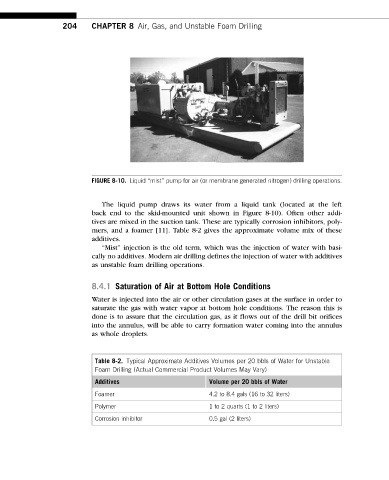
                          FIGURE 8-10. Liquid “mist” pump for air (or membrane generated nitrogen) drilling operations.


                             The liquid pump draws its water from a liquid tank (located at the left
                          back end to the skid-mounted unit shown in Figure 8-10). Often other addi-
                          tives are mixed in the suction tank. These are typically corrosion inhibitors, poly-
                          mers, and a foamer [11]. Table 8-2 gives the approximate volume mix of these
                          additives.
                             “Mist” injection is the old term, which was the injection of water with basi-
                          cally no additives. Modern air drilling defines the injection of water with additives
                          as unstable foam drilling operations.


                          8.4.1 Saturation of Air at Bottom Hole Conditions
                          Water is injected into the air or other circulation gases at the surface in order to
                          saturate the gas with water vapor at bottom hole conditions. The reason this is
                          done is to assure that the circulation gas, as it flows out of the drill bit orifices
                          into the annulus, will be able to carry formation water coming into the annulus
                          as whole droplets.


                           Table 8-2. Typical Approximate Additives Volumes per 20 bbls of Water for Unstable
                           Foam Drilling (Actual Commercial Product Volumes May Vary)
                           Additives                       Volume per 20 bbls of Water
                           Foamer                          4.2 to 8.4 gals (16 to 32 liters)
                           Polymer                         1 to 2 quarts (1 to 2 liters)
                           Corrosion inhibitor             0.5 gal (2 liters)

