


Page 217 - Air and gas Drilling Field Guide 3rd Edition
P. 217
208     CHAPTER 8 Air, Gas, and Unstable Foam Drilling


                                                                        3
                                                 Annulus Minimum KE (N-m/m )
                                     120      140       160      180       200
                                 −7000
                                                                                    −2200

                                 −7500                                              −2300
                                                   20 bbl/hr
                                                                                    −2400
                                 −8000
                                                                                    −2500
                                Depth (ft)  −8500                                   −2600  Depth (m)


                                                                                    −2700
                                                                    10 bbl/hr
                                 −9000
                                                                                    −2800

                                 −9500                                              −2900

                                                                                    −3000
                                −10000
                                     2.5         3          3.5         4          4.5
                                                 Annulus Minimum KE (lb-ft/ft 3 )

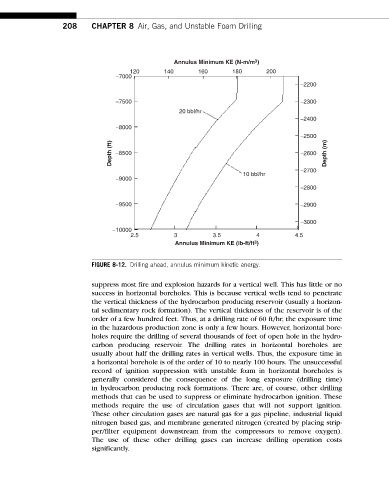
                          FIGURE 8-12. Drilling ahead, annulus minimum kinetic energy.


                          suppress most fire and explosion hazards for a vertical well. This has little or no
                          success in horizontal boreholes. This is because vertical wells tend to penetrate
                          the vertical thickness of the hydrocarbon producing reservoir (usually a horizon-
                          tal sedimentary rock formation). The vertical thickness of the reservoir is of the
                          order of a few hundred feet. Thus, at a drilling rate of 60 ft/hr, the exposure time
                          in the hazardous production zone is only a few hours. However, horizontal bore-
                          holes require the drilling of several thousands of feet of open hole in the hydro-
                          carbon producing reservoir. The drilling rates in horizontal boreholes are
                          usually about half the drilling rates in vertical wells. Thus, the exposure time in
                          a horizontal borehole is of the order of 10 to nearly 100 hours. The unsuccessful
                          record of ignition suppression with unstable foam in horizontal boreholes is
                          generally considered the consequence of the long exposure (drilling time)
                          in hydrocarbon producing rock formations. There are, of course, other drilling
                          methods that can be used to suppress or eliminate hydrocarbon ignition. These
                          methods require the use of circulation gases that will not support ignition.
                          These other circulation gases are natural gas for a gas pipeline, industrial liquid
                          nitrogen based gas, and membrane generated nitrogen (created by placing strip-
                          per/filter equipment downstream from the compressors to remove oxygen).
                          The use of these other drilling gases can increase drilling operation costs
                          significantly.

