


Page 310 - Applied Process Design For Chemical And Petrochemical Plants Volume III
P. 310
66131_Ludwig_CH10G  5/30/2001 4:41 PM  Page 269


                                                                    Heat Transfer                                          269

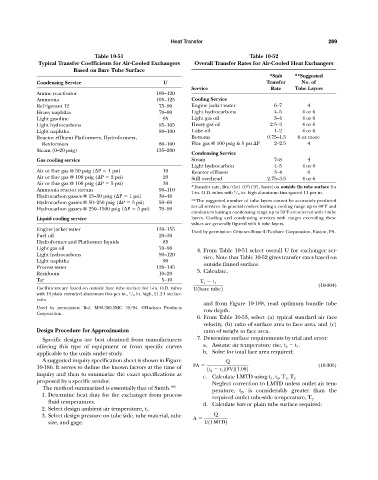
                                         Table 10-51                                           Table 10-52
                      Typical Transfer Coefficients for Air-Cooled Exchangers  Overall Transfer Rates for Air-Cooled Heat Exchangers
                                  Based on Bare Tube Surface
                                                                                                      *Stab    **Suggested
                     Condensing Service                          U                                   Transfer    No. of
                                                                           Service                     Rate    Tube Layers
                     Amine reactivator                         100—120
                     Ammonia                                   105—125     Cooling Service
                     Refrigerant 12                             75—90      Engine jacket water        0.6—7        4
                     Heavy naphtha                              70—90      Light hydrocarbons         0.4—5       4 or 6
                     Light gasoline                              95        Light gas oil              0.3—4       4 or 6
                     Light hydrocarbons                        095—105     Heavy gas oil              2.5—3       4 or 6
                     Light naphtha                             080—100     Lube oil                   0.1—2       4 or 6
                     Reactor effluent Platformers, Hydroformers,           Bottoms                   .0.75—1.5  6 or more
                       Rexformers                              080—100     Flue gas @ 100 psig & 5 psi  P  00..2—2.5  4
                     Steam (0—20 psig)                         135—200
                                                                           Condensing Service
                     Gas cooling service                                   Steam                      0.7—8        4
                                                                           Light hydrocarbon          0.4—5       4 or 6
                     Air or flue gas @ 50 psig ( P   1 psi)      10        Reactor effluent           0.3—4        6
                     Air or flue gas @ 100 psig ( P   2 psi)     20        Still overhead            .2.75—3.5    4 or 6
                     Air or flue gas @ 100 psig ( P   5 psi)     30
                                                                                              2
                                                                           *Transfer rate, Btu/(hr) (ft )(°F), based on outside fin tube surface for
                     Ammonia reactor stream                    090—110
                                                                           1-in. O.D. tubes with  / 8 in. high aluminum fins spaced 11 per in.
                                                                                          5
                     Hydrocarbon gasses @ 15—50 psig ( P   1 psi)  30—40
                     Hydrocarbon gasses @ 50—250 psig ( P   3 psi)  50—60  **The suggested number of tube layers cannot be accurately predicted
                                                                           for all services. In general coolers having a cooling range up to 80°F and
                     Hydrocarbon gasses @ 250—1500 psig ( P   5 psi)  70—90
                                                                           condensers having a condensing range up to 50°F are selected with 4 tube
                     Liquid cooling service                                layers. Cooling and condensing services with ranges exceeding these
                                                                           values are generally figured with 6 tube layers.
                     Engine jacket water                       130—155
                                                                           Used by permission: Griscom-Russell/Ecolaire Corporation, Easton, PA.
                     Fuel oil                                   20—30
                     Hydroformer and Platformer liquids          85
                     Light gas oil                              70—90
                                                                             4. From Table 10-51 select overall U for exchanger ser-
                     Light hydrocarbons                        090—120
                                                                               vice. Note that Table 10-52 gives transfer rates based on
                     Light naphtha                               90
                                                                               outside finned surface.
                     Process water                             120—145
                                                                             5. Calculate,
                     Residuum                                   10—20
                     Tar                                        05—10
                                                                              T 1   t 1
                                                                                                                       (10-304)
                     Coefficients are based on outside bare tube surface for 1-in. O.D. tubes  U1bare tube2
                     with 10 plain extruded aluminum fins per in.,  / 8 in. high, 21.2:1 surface
                                                     5
                     ratio.
                                                                               and from Figure 10-188, read optimum bundle tube
                     Used by permission: Bul. M92-300-3MC 10/94. ©Hudson Products  row depth.
                     Corporation.
                                                                             6. From Table 10-53, select (a) typical standard air face
                                                                               velocity, (b) ratio of surface area to face area, and (c)
                     Design Procedure for Approximation                        ratio of weight to face area.
                       Specific designs are best obtained from manufacturers  7. Determine surface requirements by trial and error:
                     offering this type of equipment or from specific curves   a. Assume air temperature rise, t 2   t 1 .
                     applicable to the units under study.                      b. Solve for total face area required:
                       A suggested inquiry specification sheet is shown in Figure      Q
                                                                            FA                                         (10-305)
                     10-186. It serves to define the known factors at the time of  1t 2   t 1 21FV211.082
                     inquiry and then to summarize the exact specifications as
                                                                               c. Calculate LMTD using t 1 , t 2 , T 1 , T 2
                     proposed by a specific vendor.                               Neglect correction to LMTD unless outlet air tem-
                       The method summarized is essentially that of Smith. 106
                                                                                  perature, t 2 , is considerably greater than the
                       1. Determine heat duty for the exchanger from process
                                                                                  required outlet tube-side temperature, T 2 .
                         fluid temperatures.
                                                                               d. Calculate bare or plain tube surface required:
                       2. Select design ambient air temperature, t 1 .
                       3. Select design pressure on tube side, tube material, tube  Q
                                                                            A
                         size, and gage.                                       U1LMTD2

