


Page 116 - Biobehavioral Resilence to Stress
P. 116
Adaptation to Stress                                             93


                                                Mediators of allostasis and allostatic load

                                                        Glucocorticoids (e.g., cortisol)


                                                                            Parasympathetic NS
                                         Sympathetic NS


                                                         Inflammatory cytokines


                                                       Anti-inflammatory cytokines

                                                Networks of systemic mediators of allostasis
                                                             Nonlinearity

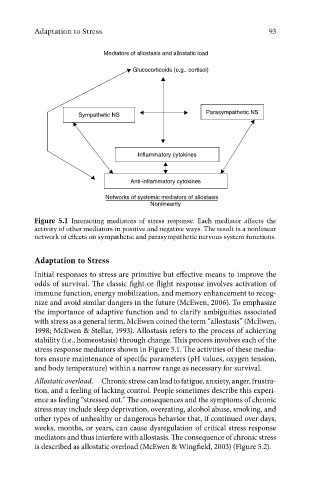
                             Figure 5.1  Interacting mediators of stress response. Each mediator affects the
                             activity of other mediators in positive and negative ways. The result is a nonlinear
                             network of effects on sympathetic and parasympathetic nervous system functions.


                             Adaptation to Stress

                             Initial responses to stress are primitive but effective means to improve the


                             odds of survival. The classic fi ght-or-flight response involves activation of

                             immune function, energy mobilization, and memory enhancement to recog-
                             nize and avoid similar dangers in the future (McEwen, 2006). To emphasize
                             the importance of adaptive function and to clarify ambiguities associated
                             with stress as a general term, McEwen coined the term “allostasis” (McEwen,
                             1998; McEwen & Stellar, 1993). Allostasis refers to the process of achieving
                             stability (i.e., homeostasis) through change. This process involves each of the


                             stress response mediators shown in Figure 5.1. The activities of these media-
                             tors ensure maintenance of specifi c parameters (pH values, oxygen tension,
                             and body temperature) within a narrow range as necessary for survival.
                             Allostatic overload.  Chronic stress can lead to fatigue, anxiety, anger, frustra-
                             tion, and a feeling of lacking control. People sometimes describe this experi-
                             ence as feeling “stressed out.” The consequences and the symptoms of chronic

                             stress may include sleep deprivation, overeating, alcohol abuse, smoking, and
                             other types of unhealthy or dangerous behavior that, if continued over days,
                             weeks, months, or years, can cause dysregulation of critical stress response
                             mediators and thus interfere with allostasis. The consequence of chronic stress


                             is described as allostatic overload (McEwen & Wingfield, 2003) (Figure 5.2).


                                                                                             12/17/2007   3:27:52 PM
                    CRC_71777_Ch005.indd   93                                                12/17/2007   3:27:52 PM
                    CRC_71777_Ch005.indd   93

