


Page 142 - Building A Succesful Board-Test Strategy
P. 142
128  BUILDING A SUCCESSFUL BOARD-TEST STRATEGY


                         Solder Volume by Assembly


                               xcess solder
             UQL
                                (bridge)
                         E
             UCL|


                                               Insufficient
                                                 solder


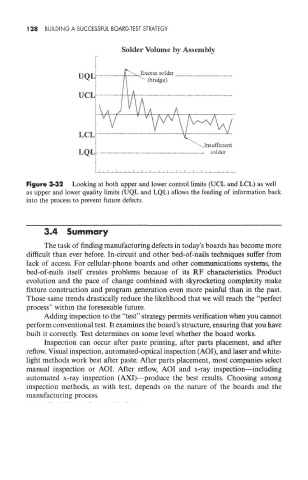
 Figure 3-32  Looking at both upper and lower control limits (UCL and LCL) as well
 as upper and lower quality limits (UQL and LQL) allows the feeding of information back
 into the process to prevent future defects.


    3.4 Summary

    The task of finding manufacturing defects in today's boards has become more
 difficult than ever before. In-circuit and other bed-of-nails techniques suffer from
 lack of access. For cellular-phone boards and other communications systems, the
 bed-of-nails itself creates problems because of its RF characteristics. Product
 evolution and the pace of change combined with skyrocketing complexity make
 fixture construction and program generation even more painful than in the past.
 Those same trends drastically reduce the likelihood that we will reach the "perfect
 process" within the foreseeable future.
    Adding inspection to the "test" strategy permits verification when you cannot
 perform conventional test. It examines the board's structure, ensuring that you have
 built it correctly. Test determines on some level whether the board works.
    Inspection can occur after paste printing, after parts placement, and after
 reflow. Visual inspection, automated-optical inspection (AOI), and laser and white-
 light methods work best after paste. After parts placement, most companies select
 manual inspection or AOI. After reflow, AOI and x-ray inspection—including
 automated x-ray inspection (AXI)—produce the best results. Choosing among
 inspection methods, as with test, depends on the nature of the boards and the
 manufacturing process.

