


Page 330 - Buried Pipe Design
P. 330
Steel and Ductile Iron Flexible Pipe Products  301

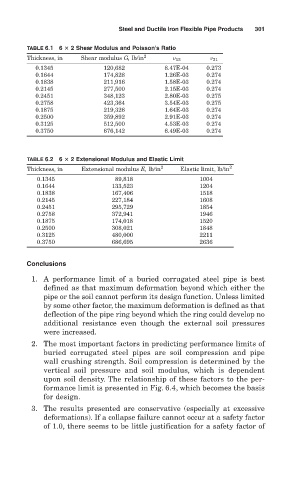
         TABLE 6.1 6   2 Shear Modulus and Poisson’s Ratio
         Thickness, in  Shear modulus G, lb/in 2    12       21
            0.1345            120,682          8.47E-04   0.273
            0.1644            174,828          1.26E-03   0.274
            0.1838            211,916          1.58E-03   0.274
            0.2145            277,500          2.15E-03   0.274
            0.2451            348,123          2.80E-03   0.275
            0.2758            423,364          3.54E-03   0.275
            0.1875            219,326          1.64E-03   0.274
            0.2500            359,892          2.91E-03   0.274
            0.3125            512,500          4.53E-03   0.274
            0.3750            676,142          6.49E-03   0.274


         TABLE 6.2 6   2 Extensional Modulus and Elastic Limit
         Thickness, in  Extensional modulus E, lb/in 2  Elastic limit, lb/in 2
            0.1345               89,818                 1004
            0.1644               133,523                1204
            0.1838               167,406                1518
            0.2145               227,184                1608
            0.2451               295,729                1854
            0.2758               372,941                1946
            0.1875               174,018                1520
            0.2500               308,021                1848
            0.3125               480,000                2211
            0.3750               686,695                2636


         Conclusions
           1. A performance limit of a buried corrugated steel pipe  is best
              defined as that maximum deformation beyond which either the
              pipe or the soil cannot perform its design function. Unless limited
              by some other factor, the maximum deformation is defined as that
              deflection of the pipe ring beyond which the ring could develop no
              additional resistance even though the external soil pressures
              were increased.
           2. The most important factors in predicting performance limits of
              buried corrugated steel pipes are soil compression and pipe
              wall crushing strength. Soil compression is determined by the
              vertical soil pressure and soil modulus, which  is dependent
              upon soil density. The relationship of these factors to the per-
              formance limit is presented in Fig. 6.4, which becomes the basis
              for design.
           3. The results presented are conservative (especially at excessive
              deformations). If a collapse failure cannot occur at a safety factor
              of 1.0, there seems to be little justification for a safety factor of

