


Page 336 - Buried Pipe Design
P. 336
Steel and Ductile Iron Flexible Pipe Products  307


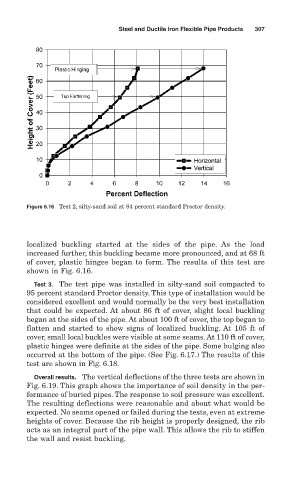
         Figure 6.16 Test 2, silty-sand soil at 84 percent standard Proctor density.


         localized buckling started at the sides of the pipe. As the load
         increased further, this buckling became more pronounced, and at 68 ft
         of cover, plastic hinges began to form. The results of this test are
         shown in Fig. 6.16.
           Test 3. The test pipe was  installed  in silty-sand soil compacted to
         95 percent standard Proctor density. This type of installation would be
         considered excellent and would normally be the very best installation
         that could be expected. At about 86 ft of cover, slight local buckling
         began at the sides of the pipe. At about 100 ft of cover, the top began to
         flatten and started to show signs of localized buckling. At 105 ft of
         cover, small local buckles were visible at some seams. At 110 ft of cover,
         plastic hinges were definite at the sides of the pipe. Some bulging also
         occurred at the bottom of the pipe. (See Fig. 6.17.) The results of this
         test are shown in Fig. 6.18.
           Overall results. The vertical deflections of the three tests are shown in
         Fig. 6.19. This graph shows the importance of soil density in the per-
         formance of buried pipes. The response to soil pressure was excellent.
         The resulting deflections were reasonable and about what would be
         expected. No seams opened or failed during the tests, even at extreme
         heights of cover. Because the rib height is properly designed, the rib
         acts as an integral part of the pipe wall. This allows the rib to stiffen
         the wall and resist buckling.

