


Page 147 - Calculus Workbook For Dummies
P. 147
131
                                               Chapter 8: Using Differentiation to Solve Practical Problems


                A Day at the Races: Position,

                Velocity, and Acceleration


                          The most important thing to know about this type of problem is that velocity is the
                          derivative of position and acceleration is the derivative of velocity. The following
                          points about position, velocity, and acceleration with regard to the chariot race in
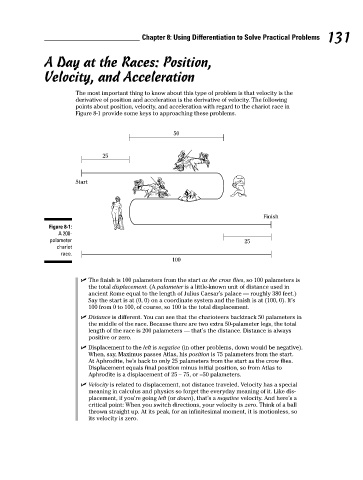
                          Figure 8-1 provide some keys to approaching these problems.


                                                          50


                                  25


                          Start


                                                                                       Finish
                 Figure 8-1:
                    A 200-
                 palameter                                                       25
                   chariot
                     race.
                                                         100


                             The finish is 100 palameters from the start as the crow flies, so 100 palameters is
                              the total displacement. (A palameter is a little-known unit of distance used in
                              ancient Rome equal to the length of Julius Caesar’s palace — roughly 380 feet.)
                              Say the start is at (0, 0) on a coordinate system and the finish is at (100, 0). It’s
                              100 from 0 to 100, of course, so 100 is the total displacement.
                             Distance is different. You can see that the charioteers backtrack 50 palameters in
                              the middle of the race. Because there are two extra 50-palameter legs, the total
                              length of the race is 200 palameters — that’s the distance. Distance is always
                              positive or zero.
                             Displacement to the left is negative (in other problems, down would be negative).
                              When, say, Maximus passes Atlas, his position is 75 palameters from the start.
                              At Aphrodite, he’s back to only 25 palameters from the start as the crow flies.
                              Displacement equals final position minus initial position, so from Atlas to
                              Aphrodite is a displacement of 25 -  75, or –50 palameters.
                             Velocity is related to displacement, not distance traveled. Velocity has a special
                              meaning in calculus and physics so forget the everyday meaning of it. Like dis-
                              placement, if you’re going left (or down), that’s a negative velocity. And here’s a
                              critical point: When you switch directions, your velocity is zero. Think of a ball
                              thrown straight up. At its peak, for an infinitesimal moment, it is motionless, so
                              its velocity is zero.

