


Page 202 - Chemical and process design handbook
P. 202
Speight_Part II_C  11/7/01  3:08 PM  Page 2.142


                  2.142                 MANUFACTURE OF CHEMICALS

                                                              Precipitators  Cyclones
                          Preheating   Reaction   Quench
                  Oil       zone      chamber    zone                            Bag filter


                                                   Carbon to storage
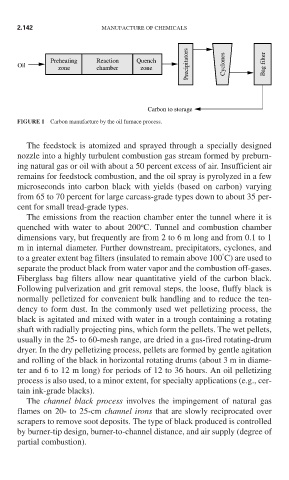
                  FIGURE 1  Carbon manufacture by the oil furnace process.

                    The feedstock is atomized and sprayed through a specially designed
                  nozzle into a highly turbulent combustion gas stream formed by preburn-
                  ing natural gas or oil with about a 50 percent excess of air. Insufficient air
                  remains for feedstock combustion, and the oil spray is pyrolyzed in a few
                  microseconds into carbon black with yields (based on carbon) varying
                  from 65 to 70 percent for large carcass-grade types down to about 35 per-
                  cent for small tread-grade types.
                    The emissions from the reaction chamber enter the tunnel where it is
                                                 o
                  quenched with water to about 200 C. Tunnel and combustion chamber
                  dimensions vary, but frequently are from 2 to 6 m long and from 0.1 to 1
                  m in internal diameter. Further downstream, precipitators, cyclones, and
                                                                      °
                  to a greater extent bag filters (insulated to remain above 100 C) are used to
                  separate the product black from water vapor and the combustion off-gases.
                  Fiberglass bag filters allow near quantitative yield of the carbon black.
                  Following pulverization and grit removal steps, the loose, fluffy black is
                  normally pelletized for convenient bulk handling and to reduce the ten-
                  dency to form dust. In the commonly used wet pelletizing process, the
                  black is agitated and mixed with water in a trough containing a rotating
                  shaft with radially projecting pins, which form the pellets. The wet pellets,
                  usually in the 25- to 60-mesh range, are dried in a gas-fired rotating-drum
                  dryer. In the dry pelletizing process, pellets are formed by gentle agitation
                  and rolling of the black in horizontal rotating drums (about 3 m in diame-
                  ter and 6 to 12 m long) for periods of 12 to 36 hours. An oil pelletizing
                  process is also used, to a minor extent, for specialty applications (e.g., cer-
                  tain ink-grade blacks).
                    The  channel black process involves the impingement of natural gas
                  flames on 20- to 25-cm channel irons that are slowly reciprocated over
                  scrapers to remove soot deposits. The type of black produced is controlled
                  by burner-tip design, burner-to-channel distance, and air supply (degree of
                  partial combustion).

