


Page 226 - Cultural Competence in Health Education
P. 226
204   Cultural  Competence in Health Education and Health Promotion


                                     2000                              2050


                                   Non-Hispanic                      Non-Hispanic
                                     white                             white
                                     84%                               64%


                                                                                        Non-
                                                                                      Hispanic
                                                Non-                                    black
                                               Hispanic
                               Hispanic                                                 12%
                                 6%             black       Hispanic            Non-Hispanic
                                                8%           16%
                                                                      Non-Hispanic  American
                                          Non-Hispanic                 Asian and  Indian and
                               Non-Hispanic
                                 Asian and  American                    Pacific   Alaska
                                  Pacific  Indian and                   Islander  Native
                                 Islander   Alaska                       7%        0.6%
                                   2%       Native
                                             0.4%
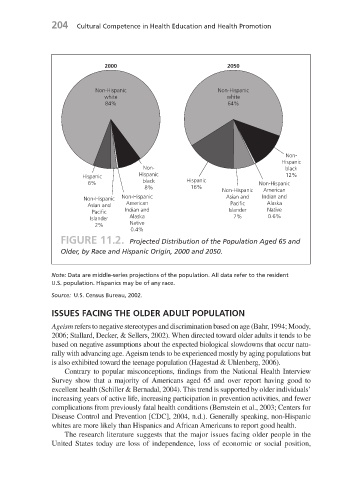
                         FIGURE 11.2.  Projected Distribution of the Population Aged 65 and
                         Older, by Race and Hispanic Origin, 2000 and 2050.


                       Note: Data are middle - series projections of the population. All data refer to the resident
                       U.S. population. Hispanics may be of any race.
                         Source:  U.S. Census Bureau, 2002.

                           ISSUES FACING THE OLDER ADULT POPULATION

                          Ageism  refers to negative stereotypes and discrimination based on age (Bahr, 1994; Moody,
                       2006; Stallard, Decker,  &  Sellers, 2002). When directed toward older adults it tends to be
                       based on negative assumptions about the expected biological slowdowns that occur natu-
                       rally with advancing age. Ageism tends to be experienced mostly by aging populations but
                       is also exhibited toward the teenage population (Hagestad  &  Uhlenberg, 2006).
                           Contrary to popular misconceptions, findings from the National Health Interview

                       Survey show that a majority of Americans aged 65 and over report having good to
                         excellent health (Schiller  &  Bernadal, 2004). This trend is supported by older individuals ’
                       increasing years of active life, increasing participation in prevention activities, and fewer
                       complications from previously fatal health conditions (Bernstein et al., 2003; Centers for
                       Disease Control and Prevention [CDC], 2004, n.d.). Generally speaking, non - Hispanic
                       whites are more likely than Hispanics and African Americans to report good health.
                           The research literature suggests that the major issues facing older people in the
                       United States today are loss of independence, loss of economic or social position,


                                                                                                  7/1/08   3:01:51 PM
          c11.indd   204                                                                          7/1/08   3:01:51 PM
          c11.indd   204

