


Page 272 - Design of Solar Thermal Power Plants
P. 272
254              4. DESIGN OF THE CONCENTRATION SYSTEM


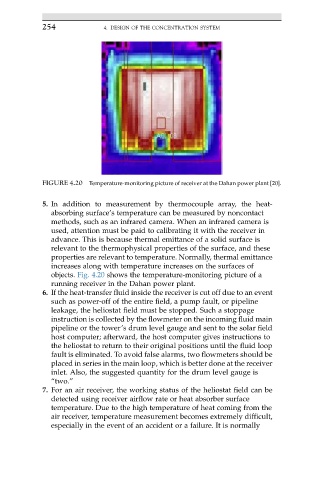
            FIGURE 4.20  Temperature-monitoring picture of receiver at the Dahan power plant [20].


            5. In addition to measurement by thermocouple array, the heat-
               absorbing surface’s temperature can be measured by noncontact
               methods, such as an infrared camera. When an infrared camera is
               used, attention must be paid to calibrating it with the receiver in
               advance. This is because thermal emittance of a solid surface is
               relevant to the thermophysical properties of the surface, and these
               properties are relevant to temperature. Normally, thermal emittance
               increases along with temperature increases on the surfaces of
               objects. Fig. 4.20 shows the temperature-monitoring picture of a
               running receiver in the Dahan power plant.
            6. If the heat-transfer fluid inside the receiver is cut off due to an event
               such as power-off of the entire field, a pump fault, or pipeline
               leakage, the heliostat field must be stopped. Such a stoppage
               instruction is collected by the flowmeter on the incoming fluid main
               pipeline or the tower’s drum level gauge and sent to the solar field
               host computer; afterward, the host computer gives instructions to
               the heliostat to return to their original positions until the fluid loop
               fault is eliminated. To avoid false alarms, two flowmeters should be
               placed in series in the main loop, which is better done at the receiver
               inlet. Also, the suggested quantity for the drum level gauge is
               “two.”
            7. For an air receiver, the working status of the heliostat field can be
               detected using receiver airflow rate or heat absorber surface
               temperature. Due to the high temperature of heat coming from the
               air receiver, temperature measurement becomes extremely difficult,
               especially in the event of an accident or a failure. It is normally

