


Page 107 - Designing Autonomous Mobile Robots : Inside the Mindo f an Intellegent Machine
P. 107
Chapter 6


                             802.11     802.11      Ethernet     Video
                            Ethernet    Ethernet                            Camera
                           Access Point  Radio                  Server


                                                 Port           Slave 2     Xducers
                                                Server          (Sonar)

                     Ethernet  Access Point             Supervisor  Slave 3  Ranger
                             802.11
                                                                             Laser
                            Ethernet
                                                                (Lidar)
                                                        RS-232  Control
                                                                Slave 1
                                                               Mobile Base
                                                            RS-232
                              Host
                            Computer                            Master
                                                               Mobile Base
                                           Mobile Robot


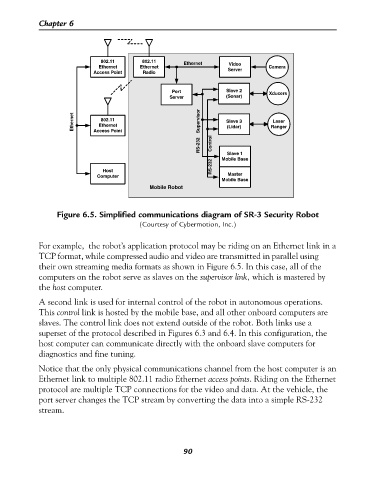
                 Figure 6.5. Simplified communications diagram of SR-3 Security Robot
                                        (Courtesy of Cybermotion, Inc.)


            For example,  the robot’s application protocol may be riding on an Ethernet link in a
            TCP format, while compressed audio and video are transmitted in parallel using
            their own streaming media formats as shown in Figure 6.5. In this case, all of the
            computers on the robot serve as slaves on the supervisor link, which is mastered by
            the host computer.

            A second link is used for internal control of the robot in autonomous operations.
            This control link is hosted by the mobile base, and all other onboard computers are
            slaves. The control link does not extend outside of the robot. Both links use a
            superset of the protocol described in Figures 6.3 and 6.4. In this configuration, the
            host computer can communicate directly with the onboard slave computers for
            diagnostics and fine tuning.
            Notice that the only physical communications channel from the host computer is an
            Ethernet link to multiple 802.11 radio Ethernet access points. Riding on the Ethernet
            protocol are multiple TCP connections for the video and data. At the vehicle, the
            port server changes the TCP stream by converting the data into a simple RS-232
            stream.


                                                    90

