


Page 108 - Designing Autonomous Mobile Robots : Inside the Mindo f an Intellegent Machine
P. 108
Communications and Control


                                 802.11     802.11  Ethernet
                                                               Lap Top
                                Ethernet    Ethernet        Master Computer    Camera
                               Access Point  Radio
                                                           RS-232  RS-232  Slave 2  Xducers
                                                                    (Sonar)

                         Ethernet  Access Point                     Slave 3     Ranger
                                 802.11
                                                                                 Laser
                                Ethernet
                                                                    (Lidar)


                                 Host                       Mobile Robot
                                Computer


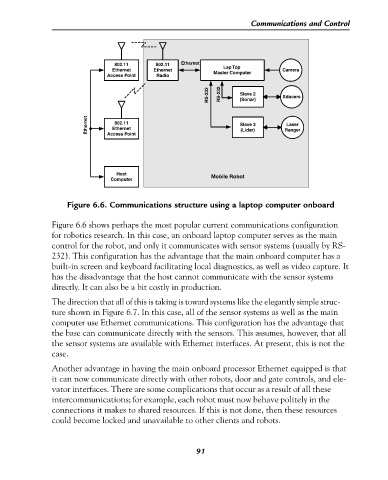
                    Figure 6.6. Communications structure using a laptop computer onboard

               Figure 6.6 shows perhaps the most popular current communications configuration
               for robotics research. In this case, an onboard laptop computer serves as the main
               control for the robot, and only it communicates with sensor systems (usually by RS-
               232). This configuration has the advantage that the main onboard computer has a
               built-in screen and keyboard facilitating local diagnostics, as well as video capture. It
               has the disadvantage that the host cannot communicate with the sensor systems
               directly. It can also be a bit costly in production.

               The direction that all of this is taking is toward systems like the elegantly simple struc-
               ture shown in Figure 6.7. In this case, all of the sensor systems as well as the main
               computer use Ethernet communications. This configuration has the advantage that
               the base can communicate directly with the sensors. This assumes, however, that all
               the sensor systems are available with Ethernet interfaces. At present, this is not the
               case.
               Another advantage in having the main onboard processor Ethernet equipped is that
               it can now communicate directly with other robots, door and gate controls, and ele-
               vator interfaces. There are some complications that occur as a result of all these
               intercommunications; for example, each robot must now behave politely in the
               connections it makes to shared resources. If this is not done, then these resources
               could become locked and unavailable to other clients and robots.


                                                        91

