


Page 109 - Designing Autonomous Mobile Robots : Inside the Mindo f an Intellegent Machine
P. 109
Chapter 6


                              802.11      802.11  Ethernet
                                                             Lap Top
                             Ethernet    Ethernet                             Camera
                                                          Master Computer
                            Access Point  Radio
                                                                  Slave 2     Xducers
                                                                  (Sonar)

                      Ethernet  Access Point                      Slave 3      Ranger
                              802.11
                                                                               Laser
                             Ethernet
                                                                  (Lidar)


                              Host
                             Computer                     Mobile Robot


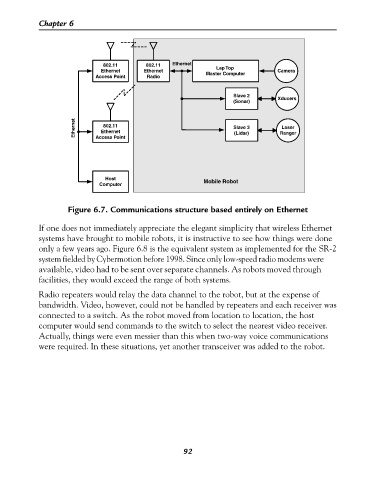
                    Figure 6.7. Communications structure based entirely on Ethernet

            If one does not immediately appreciate the elegant simplicity that wireless Ethernet
            systems have brought to mobile robots, it is instructive to see how things were done
            only a few years ago. Figure 6.8 is the equivalent system as implemented for the SR-2
            system fielded by Cybermotion before 1998. Since only low-speed radio modems were
            available, video had to be sent over separate channels. As robots moved through
            facilities, they would exceed the range of both systems.
            Radio repeaters would relay the data channel to the robot, but at the expense of
            bandwidth. Video, however, could not be handled by repeaters and each receiver was
            connected to a switch. As the robot moved from location to location, the host
            computer would send commands to the switch to select the nearest video receiver.
            Actually, things were even messier than this when two-way voice communications
            were required. In these situations, yet another transceiver was added to the robot.


                                                    92

