


Page 171 - Designing Autonomous Mobile Robots : Inside the Mindo f an Intellegent Machine
P. 171
Chapter 11

            The number of points remaining that represent a flat surface is one indication of the
            image quality in this example. For example, if we end up with 98 out of 100 points,
            then we have a very high confidence in the data. However, if we end up with, for
            example, 10 points, there is a chance that these points are not really the surface, but
            just ten random points that lie on a straight line. The average error of the remaining
            points along the wall is another indicator of quality. If we throw out 25 points, but
            the remaining 75 points are almost perfectly along a line, then this is a positive
            quality indicator.


                                                        e12    C23
                                           C12             C


                                  P1            r        e23
                                                  a
                              (X1,Y1)                    r   r      r


                                                d
                                       M12
                             ((X1+X2)/2,(Y1+Y2)/2)        P2           P3
                                                                   (X3,Y3)
                                                        (X2,Y2)


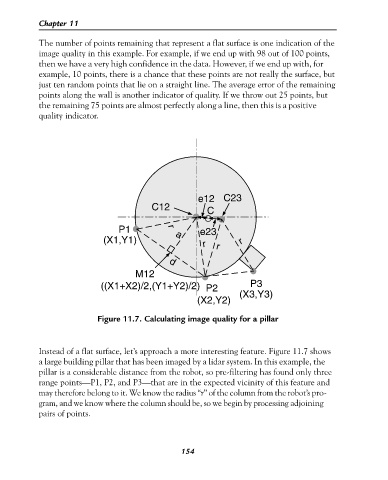
                            Figure 11.7. Calculating image quality for a pillar


            Instead of a flat surface, let’s approach a more interesting feature. Figure 11.7 shows
            a large building pillar that has been imaged by a lidar system. In this example, the
            pillar is a considerable distance from the robot, so pre-filtering has found only three
            range points—P1, P2, and P3—that are in the expected vicinity of this feature and
            may therefore belong to it. We know the radius “r” of the column from the robot’s pro-
            gram, and we know where the column should be, so we begin by processing adjoining
            pairs of points.


                                                   154

