


Page 166 - Designing Autonomous Mobile Robots : Inside the Mindo f an Intellegent Machine
P. 166
Hard Navigation vs. Fuzzy Navigation


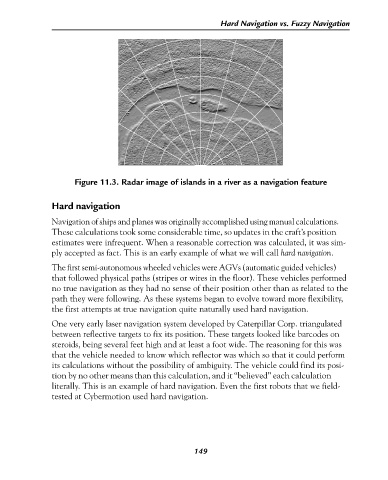
                      Figure 11.3. Radar image of islands in a river as a navigation feature


               Hard navigation

               Navigation of ships and planes was originally accomplished using manual calculations.
               These calculations took some considerable time, so updates in the craft’s position
               estimates were infrequent. When a reasonable correction was calculated, it was sim-
               ply accepted as fact. This is an early example of what we will call hard navigation.

               The first semi-autonomous wheeled vehicles were AGVs (automatic guided vehicles)
               that followed physical paths (stripes or wires in the floor). These vehicles performed
               no true navigation as they had no sense of their position other than as related to the
               path they were following. As these systems began to evolve toward more flexibility,
               the first attempts at true navigation quite naturally used hard navigation.

               One very early laser navigation system developed by Caterpillar Corp. triangulated
               between reflective targets to fix its position. These targets looked like barcodes on
               steroids, being several feet high and at least a foot wide. The reasoning for this was
               that the vehicle needed to know which reflector was which so that it could perform
               its calculations without the possibility of ambiguity. The vehicle could find its posi-
               tion by no other means than this calculation, and it “believed” each calculation
               literally. This is an example of hard navigation. Even the first robots that we field-
               tested at Cybermotion used hard navigation.


                                                       149

