


Page 220 - Dynamics of Mechanical Systems
P. 220
0593_C07_fm  Page 201  Monday, May 6, 2002  2:42 PM


                       Inertia, Second Moment Vectors, Moments and Products of Inertia, Inertia Dyadics  201


                                           n  a
                                                                      n  a
                         n  b                                                        d  a
                                                    P(m)                                      P(m)


                                        p                                           p


                        O                                               O
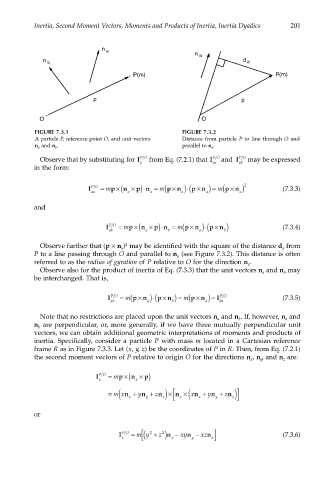
                       FIGURE 7.3.1                                FIGURE 7.3.2
                       A particle P, reference point O, and unit vectors  Distance from particle P  to line through O  and
                       n a  and n b .                              parallel to n a .
                        Observe that by substituting for I PO  from Eq. (7.2.1) that I P O  and  I PO  may be expressed
                                                      a                     aa     ab
                       in the form:

                                                     p n =
                                                                                 ×
                                                                       ×
                                                                ×
                                       I  PO  =  m p ×( n × ) ⋅  m( p n )⋅( p n ) = m( p n ) 2  (7.3.3)
                                        aa        a      a        a       a         a
                       and
                                                                     ×
                                                          p n =
                                                                            ×
                                            I PO  =  m p ×( n × ) ⋅  m( p n )⋅( p n )           (7.3.4)
                                             ab         a     b         a      b
                        Observe further that (p × n )  may be identified with the square of the distance d  from
                                                  2
                                                 a
                                                                                                a
                       P to a line passing through O and parallel to n  (see Figure 7.3.2). This distance is often
                                                                 a
                       referred to as the radius of gyration of P relative to O for the direction n .
                                                                                      a
                        Observe also for the product of inertia of Eq. (7.3.3) that the unit vectors n  and n  may
                                                                                          a
                                                                                                 b
                       be interchanged. That is,
                                                     ×
                                                             ×
                                                                       ×
                                             I  PO  = m( p n )⋅( p n ) = m( p n ) =  I  PO      (7.3.5)
                                             ab         a       b         a   ba
                        Note that no restrictions are placed upon the unit vectors n  and n . If, however, n  and
                                                                                                 a
                                                                                   b
                                                                             a
                       n  are perpendicular, or, more generally, if we have three mutually perpendicular unit
                        b
                       vectors, we can obtain additional geometric interpretations of moments and products of
                       inertia. Specifically, consider a particle P  with mass  m located in a Cartesian reference
                       frame R as in Figure 7.3.3. Let (x, y, z) be the coordinates of P in R. Then, from Eq. (7.2.1)
                       the second moment vectors of P relative to origin O for the directions n , n , and n  are:
                                                                                       x
                                                                                                 z
                                                                                          y
                                         I PO  =  m p ×( n × p)
                                          x          x
                                                             z) [
                                                                  x (
                                                   x (
                                             =  mx n +  y n +  z n ×  n ×  x n +  y n +  z n z)]
                                                        y
                                                                        x
                                                                             y
                       or
                                                     my +
                                                I PO = ( [  2  z 2  n )  −  xy n −  xz n z]     (7.3.6)
                                                 x             x     y

