


Page 219 - Dynamics of Mechanical Systems
P. 219
0593_C07_fm  Page 200  Monday, May 6, 2002  2:42 PM


                       200                                                 Dynamics of Mechanical Systems


                                                                                                 n
                                                                                                  a

                             n  a
                                                                         P  (m  )  P  (m  )
                                                                             2
                                                    P(m)                  2         i  i
                                                                        P  (m  )         p
                                                                         1  1             i
                                        p                                        P  (m   )
                                                                                  N
                                                                                     N
                        O                                                                      O
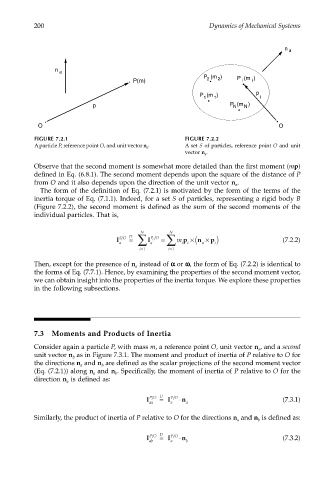
                       FIGURE 7.2.1                                FIGURE 7.2.2
                       A particle P, reference point O, and unit vector n a .  A set S of particles, reference point O and unit
                                                                   vector n a .
                       Observe that the second moment is somewhat more detailed than the first moment (mp)
                       defined in Eq. (6.8.1). The second moment depends upon the square of the distance of P
                       from O and it also depends upon the direction of the unit vector n .
                                                                                  a
                        The form of the definition of Eq. (7.2.1) is motivated by the form of the terms of the
                       inertia torque of Eq. (7.1.1). Indeed, for a set S of particles, representing a rigid body B
                       (Figure 7.2.2), the second moment is defined as the sum of the second moments of the
                       individual particles. That is,


                                                      N
                                                               N
                                                   =
                                                                           p
                                               I SO D  ∑ I PO  = ∑ m p ×( n × )                 (7.2.2)
                                                          i
                                                a        a         i  i  a  i
                                                      i=1      i=1
                       Then, except for the presence of n  instead of αα αα or ωω ωω, the form of Eq. (7.2.2) is identical to
                                                     a
                       the forms of Eq. (7.7.1). Hence, by examining the properties of the second moment vector,
                       we can obtain insight into the properties of the inertia torque. We explore these properties
                       in the following subsections.


                       7.3  Moments and Products of Inertia

                       Consider again a particle P, with mass m, a reference point O, unit vector n , and a second
                                                                                         a
                       unit vector n  as in Figure 7.3.1. The moment and product of inertia of P relative to O for
                                  b
                       the directions n  and n  are defined as the scalar projections of the second moment vector
                                           b
                                    a
                       (Eq. (7.2.1)) along n  and n . Specifically, the moment of inertia of P relative to O for the
                                               b
                                        a
                       direction n  is defined as:
                                a
                                                         PO D  PO
                                                        I   =  I  n ⋅                           (7.3.1)
                                                         aa    a    a
                       Similarly, the product of inertia of P relative to O for the directions n  and n  is defined as:
                                                                                         b
                                                                                   a
                                                         PO D  PO
                                                        I   =  I  n ⋅                           (7.3.2)
                                                         ab    a    b

