


Page 114 - Encyclopedia of Chemical Compounds 3 Vols
P. 114
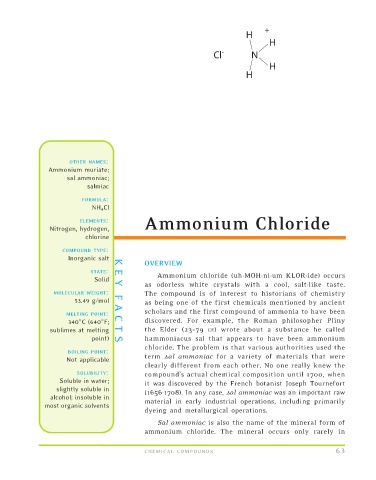
+
                                                                     H
                                                                            H
                                                            Cl -       N
                                                                            H
                                                                     H


                    OTHER NAMES:
              Ammonium muriate;
                    sal ammoniac;
                         salmiac
                        FORMULA:
                          NH 4 Cl
                       ELEMENTS:         Ammonium Chloride
               Nitrogen, hydrogen,
                         chlorine
                  COMPOUND TYPE:
                    Inorganic salt
                                         OVERVIEW
                          STATE:  KE
                                             Ammonium chloride (uh-MOH-ni-um KLOR-ide) occurs
                           Solid
                                         as odorless white crystals with a cool, salt-like taste.
                                 Y
                                         The compound is of interest to historians of chemistry
                      53.49 g/mol        as being one of the first chemicals mentioned by ancient
                MOLECULAR WEIGHT: F
                                         scholars and the first compound of ammonia to have been
                                 A

                    340 C (640 F;        discovered. For example, the Roman philosopher Pliny
                   MELTING POINT: C
               sublimes at melting  T    the Elder (23–79 CE) wrote about a substance he called
                          point)  S      hammoniacus sal that appears to have been ammonium
                                         chloride. The problem is that various authorities used the
                    BOILING POINT:
                                         term sal ammoniac for a variety of materials that were
                   Not applicable
                                         clearly different from each other. No one really knew the
                      SOLUBILITY:        compound’s actual chemical composition until 1700, when
                  Soluble in water;
                                         it was discovered by the French botanist Joseph Tournefort
                 slightly soluble in
                                         (1656-1708). In any case, sal ammoniac was an important raw
               alcohol; insoluble in
                                         material in early industrial operations, including primarily
             most organic solvents
                                         dyeing and metallurgical operations.
                                             Sal ammoniac is also the name of the mineral form of
                                         ammonium chloride. The mineral occurs only rarely in
                                         CHEMICAL COMPOUNDS                                   63

