


Page 259 - Academic Press Encyclopedia of Physical Science and Technology 3rd InOrganic Chemistry
P. 259
P1: GNH Final Pages
 Encyclopedia of Physical Science and Technology  EN009M-428  July 18, 2001  1:6


               516                                                                       Metal Particles and Cluster Compounds


                                                                   In order to demonstrate what the composition was of the
                                                                 material coming off the evaporating surface for each ele-
                                                                 ment, ingeneous methods of detection of single atoms,
                                                                 dimers, and higher aggregates have been devised. The
                                                                 most useful has been mass spectrometry where the metal
                                                                 is heated in a Knudsen cell (hot oven with a pinhole exit)
                                                                 and the vapor escapes through a small hole, exits into a
                                                                 chamber in which the particles are ionized, and is mass
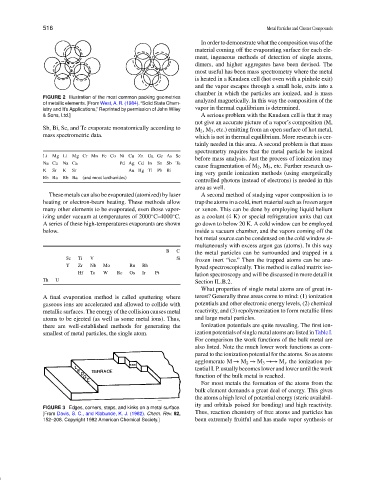
               FIGURE 2 Illustration of the most common packing geometries
               of metallic elements. [From West, A. R. (1984). “Solid State Chem-  analyzed magnetically. In this way the composition of the
               istry and It’s Applications,” Reprinted by permission of John Wiley  vapor in thermal equilibrium is determined.
               & Sons, Ltd.]                                       A serious problem with the Knudsen cell is that it may
                                                                 not give an accurate picture of a vapor’s composition (M,
               Sb, Bi, Se, and Te evaporate monatomically according to  M 2 ,M 3 , etc.) emitting from an open surface of hot metal,
               mass spectrometric data.                          which is not in thermal equilibrium. More research is cer-
                                                                 tainly needed in this area. A second problem is that mass
                                                                 spectrometry requires that the metal particle be ionized
               Li  Mg Li  Mg Cr Mn Fe Co Ni Cu Zn Ga Ge As Se
                                                                 before mass analysis. Just the process of ionization may
               Na Ca  Na Ca              Pd Ag Cd In  Sn Sb Te
                                                                 cause fragmentation of M 2 ,M 3 , etc. Further research us-
               K  Sr  K  Sr                Au Hg Tl  Pb Bi
                                                                 ing very gentle ionization methods (using energetically
               Rb Ba  Rb Ba  (and most lanthanides)
                                                                 controlled photons instead of electrons) is needed in this
                                                                 area as well.
                 These metals can also be evaporated (atomized) by laser  A second method of studying vapor composition is to
               heating or electron-beam heating. These methods allow  trap the atoms in a cold, inert material such as frozen argon
               many other elements to be evaporated, even those vapor-  or xenon. This can be done by employing liquid helium
               izing under vacuum at temperatures of 2000 C–4000 C.  as a coolant (4 K) or special refrigeration units that can
                                                          ◦
                                                   ◦
               A series of these high-temperatures evaporants are shown  go down to below 20 K. A cold window can be employed
               below.                                            inside a vacuum chamber, and the vapors coming off the
                                                                 hot metal source can be condensed on the cold window si-
                                                                 multaneously with excess argon gas (atoms). In this way
                                                        B  C     the metal particles can be surrounded and trapped in a
                       Sc  Ti  V                           Si    frozen inert “ice.” Then the trapped atoms can be ana-
                       Y   Zr  Nb  Mo       Ru  Rh               lyzed spectroscopically. This method is called matrix iso-
                           Hf  Ta  W    Re  Os  Ir  Pt
                                                                 lation spectroscopy and will be discussed in more detail in
               Th  U
                                                                 Section IL.B.2.
                                                                   What properties of single metal atoms are of great in-
               A final evaporation method is called sputtering where  terest? Generally three areas come to mind: (1) ionization
               gaseous ions are accelerated and allowed to collide with  potentials and other electronic energy levels, (2) chemical
               metallic surfaces. The energy of the collision causes metal  reactivity, and (3) repolymerization to form metallic films
               atoms to be ejected (as well as some metal ions). Thus,  and large metal particles.
               there are well-established methods for generating the  Ionization potentials are quite revealing. The first ion-
               smallest of metal particles, the single atom.     izationpotentialsofsinglemetalatomsarelistedinTableI.
                                                                 For comparison the work functions of the bulk metal are
                                                                 also listed. Note the much lower work functions as com-
                                                                 pared to the ionization potential for the atoms. So as atoms
                                                                 agglomerate M → M 2 → M 3 →→ M x the ionization po-
                                                                 tential I. P. usually becomes lower and lower until the work
                                                                 function of the bulk metal is reached.
                                                                   For most metals the formation of the atoms from the
                                                                 bulk element demands a great deal of energy. This gives
                                                                 the atoms a high level of potential energy (steric availabil-
                                                                 ity and orbitals poised for bonding) and high reactivity.
               FIGURE 3 Edges, corners, steps, and kinks on a metal surface.
               [From Davis, S. C., and Klabunde, K. J. (1982). Chem. Rev. 82,  Thus, reaction chemistry of free atoms and particles has
               152–208. Copyright 1982 American Chemical Society.]  been extremely fruitful and has made vapor synthesis or

