


Page 126 - Fluid Catalytic Cracking Handbook
P. 126
102  Fluid Catalytic Cracking Handbook


          0        1        2         3
                            Rare Earth, wt%
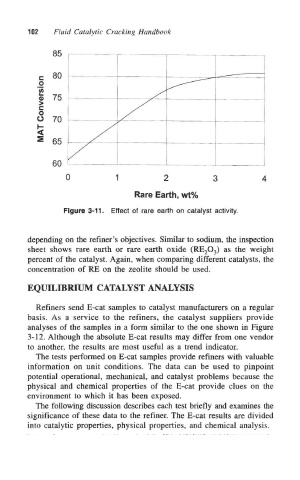
         Figure 3-11. Effect of rare earth on catalyst activity.


 depending on the refiner's objectives. Similar to sodium, the inspection
 sheet shows rare earth or rare earth oxide (RE 2O 3) as the weight
 percent of the catalyst. Again, when comparing different catalysts, the
 concentration of RE on the zeolite should be used.

 EQUILIBRIUM CATALYST ANALYSIS

  Refiners send E-cat samples to catalyst manufacturers on a regular
 basis. As a service to the refiners, the catalyst suppliers provide
 analyses of the samples in a form similar to the one shown in Figure
 3-12. Although the absolute E-cat results may differ from one vendor
 to another, the results are most useful as a trend indicator.
  The tests performed on E-cat samples provide refiners with valuable
 information on unit conditions. The data can be used to pinpoint
 potential operational, mechanical, and catalyst problems because the
 physical and chemical properties of the E-cat provide clues on the
 environment to which it has been exposed.
  The following discussion describes each test briefly and examines the
 significance of these data to the refiner. The E-cat results are divided
 into catalytic properties, physical properties, and chemical analysis.

