


Page 178 - gas transport in porous media
P. 178
Persoff
                           172
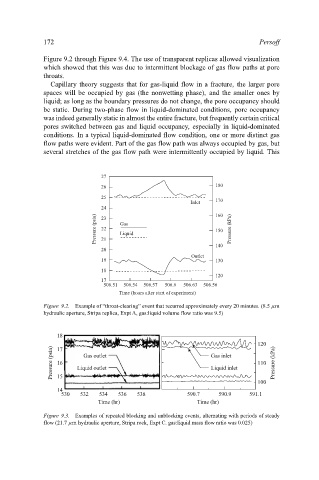
                           Figure 9.2 through Figure 9.4. The use of transparent replicas allowed visualization
                           which showed that this was due to intermittent blockage of gas flow paths at pore
                           throats.
                             Capillary theory suggests that for gas-liquid flow in a fracture, the larger pore
                           spaces will be occupied by gas (the nonwetting phase), and the smaller ones by
                           liquid; as long as the boundary pressures do not change, the pore occupancy should
                           be static. During two-phase flow in liquid-dominated conditions, pore occupancy
                           was indeed generally static in almost the entire fracture, but frequently certain critical
                           pores switched between gas and liquid occupancy, especially in liquid-dominated
                           conditions. In a typical liquid-dominated flow condition, one or more distinct gas
                           flow paths were evident. Part of the gas flow path was always occupied by gas, but
                           several stretches of the gas flow path were intermittently occupied by liquid. This


                                           27
                                           26                               180
                                           25
                                                                     Inlet  170
                                           24                               160
                                          Pressure (psia)  22  Gas          150  Pressure (kPa)
                                           23
                                                 Liquid
                                           21
                                                                            140
                                           20
                                                                     Outlet
                                           19                               130
                                           18
                                                                            120
                                           17
                                            506.51  506.54  506.57  506.6  506.63  506.56
                                                Time (hours after start of experiment)
                           Figure 9.2.  Example of “throat-clearing” event that recurred approximately every 20 minutes. (8.5 µm
                           hydraulic aperture, Stripa replica, Expt A, gas:liquid volume flow ratio was 9.5)


                               18
                                                                                        120
                             Pressure (psia)  16  Liquid outlet           Gas inlet     110  Pressure (kPa)
                               17
                                      Gas outlet
                                                                          Liquid inlet
                               15
                                                                                        100
                               14
                                530  532   534  536   538           590.7    590.9   591.1
                                          Time (hr)                    Time (hr)
                           Figure 9.3.  Examples of repeated blocking and unblocking events, alternating with periods of steady
                           flow (21.7 µm hydraulic aperture, Stripa rock, Expt C. gas:liquid mass flow ratio was 0.025)

