


Page 316 - gas transport in porous media
P. 316
Chapter 18: Measurement of Vapor Concentrations
                                  Type 1a -
                                             Flourescence or phosphorescence for direct
                                             spectroscopic measurement of contaiminant     315
                             Light
                            source/
                            Detector
                                  Type 1b -   Refractive index changes                Vapor
                             Light
                             source/                                                  Water
                            Detector
                                                                                       NAPL
                                   Type 2 -   Reversible binding with indicator molecules changes color,
                                             refractive index, or flouresces
                              Light
                             source/
                             Detector
                                                                       Indicator coating
                                                                           Reaction product
                                   Type 3 -   Chemical/biochemical reactions with contaminants
                              Light
                             source/
                             Detector

                                                                             Chemical reagent
                                                                              added to system
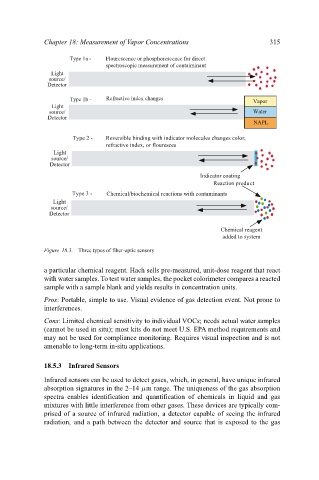
                           Figure 18.3. Three types of fiber-optic sensors


                           a particular chemical reagent. Hach sells pre-measured, unit-dose reagent that react
                           with water samples. To test water samples, the pocket colorimeter compares a reacted
                           sample with a sample blank and yields results in concentration units.
                           Pros: Portable, simple to use. Visual evidence of gas detection event. Not prone to
                           interferences.
                           Cons: Limited chemical sensitivity to individual VOCs; needs actual water samples
                           (cannot be used in situ); most kits do not meet U.S. EPA method requirements and
                           may not be used for compliance monitoring. Requires visual inspection and is not
                           amenable to long-term in-situ applications.


                           18.5.3  Infrared Sensors
                           Infrared sensors can be used to detect gases, which, in general, have unique infrared
                           absorption signatures in the 2–14 µm range. The uniqueness of the gas absorption
                           spectra enables identification and quantification of chemicals in liquid and gas
                           mixtures with little interference from other gases. These devices are typically com-
                           prised of a source of infrared radiation, a detector capable of seeing the infrared
                           radiation, and a path between the detector and source that is exposed to the gas

