


Page 266 - Low Temperature Energy Systems with Applications of Renewable Energy
P. 266
Geothermal energy in combined heat and power systems              251


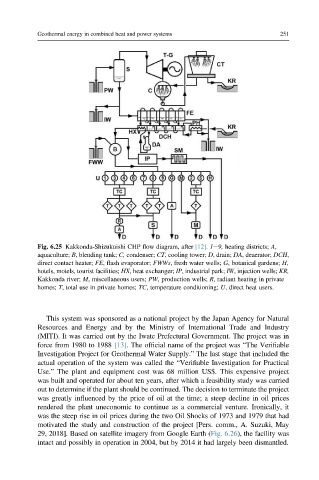
           Fig. 6.25 Kakkonda-Shizukuishi CHP flow diagram, after [12]. 1e9, heating districts; A,
           aquaculture; B, blending tank; C, condenser; CT, cooling tower; D, drain; DA, deaerator; DCH,
           direct contact heater; FE, flash evaporator; FWWs, fresh water wells; G, botanical gardens; H,
           hotels, motels, tourist facilities; HX, heat exchanger; IP, industrial park; IW, injection wells; KR,
           Kakkonda river; M, miscellaneous users; PW, production wells; R, radiant heating in private
           homes; T, total use in private homes; TC, temperature conditioning; U, direct heat users.


              This system was sponsored as a national project by the Japan Agency for Natural
           Resources and Energy and by the Ministry of International Trade and Industry
           (MITI). It was carried out by the Iwate Prefectural Government. The project was in
           force from 1980 to 1988 [13]. The official name of the project was “The Verifiable
           Investigation Project for Geothermal Water Supply.” The last stage that included the
           actual operation of the system was called the “Verifiable Investigation for Practical
           Use.” The plant and equipment cost was 68 million US$. This expensive project
           was built and operated for about ten years, after which a feasibility study was carried
           out to determine if the plant should be continued. The decision to terminate the project
           was greatly influenced by the price of oil at the time; a steep decline in oil prices
           rendered the plant uneconomic to continue as a commercial venture. Ironically, it
           was the steep rise in oil prices during the two Oil Shocks of 1973 and 1979 that had
           motivated the study and construction of the project [Pers. comm., A. Suzuki, May
           29, 2018]. Based on satellite imagery from Google Earth (Fig. 6.26), the facility was
           intact and possibly in operation in 2004, but by 2014 it had largely been dismantled.

