


Page 267 - Low Temperature Energy Systems with Applications of Renewable Energy
P. 267
252                 Low-Temperature Energy Systems with Applications of Renewable Energy


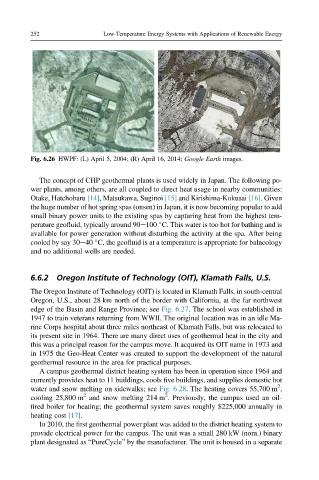
         Fig. 6.26 HWPF: (L) April 5, 2004; (R) April 16, 2014; Google Earth images.


            The concept of CHP geothermal plants is used widely in Japan. The following po-
         wer plants, among others, are all coupled to direct heat usage in nearby communities:
         Otake, Hatchobaru [14], Matsukawa, Suginoi [15] and Kirishima-Kokusai [16]. Given
         the huge number of hot spring spas (onsen) in Japan, it is now becoming popular to add
         small binary power units to the existing spas by capturing heat from the highest tem-

         perature geofluid, typically around 90e100 C. This water is too hot for bathing and is
         available for power generation without disturbing the activity at the spa. After being

         cooled by say 30e40 C, the geofluid is at a temperature is appropriate for balneology
         and no additional wells are needed.


         6.6.2  Oregon Institute of Technology (OIT), Klamath Falls, U.S.

         The Oregon Institute of Technology (OIT) is located in Klamath Falls, in south-central
         Oregon, U.S., about 28 km north of the border with California, at the far northwest
         edge of the Basin and Range Province; see Fig. 6.27. The school was established in
         1947 to train veterans returning from WWII. The original location was in an idle Ma-
         rine Corps hospital about three miles northeast of Klamath Falls, but was relocated to
         its present site in 1964. There are many direct uses of geothermal heat in the city and
         this was a principal reason for the campus move. It acquired its OIT name in 1973 and
         in 1975 the Geo-Heat Center was created to support the development of the natural
         geothermal resource in the area for practical purposes.
            A campus geothermal district heating system has been in operation since 1964 and
         currently provides heat to 11 buildings, cools five buildings, and supplies domestic hot
                                                                            2
         water and snow melting on sidewalks; see Fig. 6.28. The heating covers 55,700 m ,
                        2
                                              2
         cooling 25,800 m and snow melting 214 m . Previously, the campus used an oil-
         fired boiler for heating; the geothermal system saves roughly $225,000 annually in
         heating cost [17].
            In 2010, the first geothermal power plant was added to the district heating system to
         provide electrical power for the campus. The unit was a small 280 kW (nom.) binary
         plant designated as “PureCycle” by the manufacturer. The unit is housed in a separate

