


Page 250 - Modern Derivatization Methods for Separation Sciences
P. 250
Document                                                                                Página 1 de 2


                                                                                                         Page 116


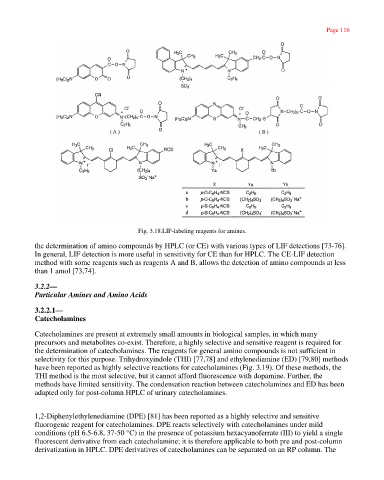
                                             Fig. 3.18.LIF-labeling reagents for amines.

            the determination of amino compounds by HPLC (or CE) with various types of LIF detections [73-76].
            In general, LIF detection is more useful in sensitivity for CE than for HPLC. The CE-LIF detection
            method with some reagents such as reagents A and B, allows the detection of amino compounds at less
            than 1 amol [73,74].

            3.2.2—
            Particular Amines and Amino Acids

            3.2.2.1—
            Catecholamines


            Catecholamines are present at extremely small amounts in biological samples, in which many
            precursors and metabolites co-exist. Therefore, a highly selective and sensitive reagent is required for
            the determination of catecholamines. The reagents for general amino compounds is not sufficient in
            selectivity for this purpose. Trihydroxyindole (THI) [77,78] and ethylenediamine (ED) [79,80] methods
            have been reported as highly selective reactions for catecholamines (Fig. 3.19). Of these methods, the
            THI method is the most selective, but it cannot afford fluorescence with dopamine. Further, the
            methods have limited sensitivity. The condensation reaction between catecholamines and ED has been
            adapted only for post-column HPLC of urinary catecholamines.


            1,2-Diphenylethylenediamine (DPE) [81] has been reported as a highly selective and sensitive
            fluorogenic reagent for catecholamines. DPE reacts selectively with catecholamines under mild
            conditions (pH 6.5-6.8, 37-50 °C) in the presence of potassium hexacyanoferrate (III) to yield a single
            fluorescent derivative from each catecholamine; it is therefore applicable to both pre and post-column
            derivatization in HPLC. DPE derivatives of catecholamines can be separated on an RP column. The


            http://emedia.netlibrary.com/nlreader/nlreader.dll?bookid=17968&filename=Page_116.ht...   30/09/2003

