


Page 250 - Modular design for machine tools
P. 250
210   Engineering Design for Machine Tool Joints


               Improvement of    Bearing with turn-finished
               economic aspect          race

                                 Advanced light-weighted structure   Application of ceramic resin
                                 consisting of sandwich plate with   concrete to structural body
                                               TM
                                 porous metal or Truss  Grid   components to reduce thermal
                                 (composite material)     deformation
                                 Rolling bearing—roller with   Preloading mechanism for
                Improvement of
                                 logarithmic curve        rolling bearing with KMT-C nut
                performances
                                 Linear motor drive with MRF   Sure fixation of motor rotor
                                 (magneto-rheological fluid)   to main spindle
                                 to increase damping      Linear roller guide with larger
                                 Honing finishing for traveling   stiffness and damping
                                                          Water hydrostatic guideway
                                 quill instead of manual lapping
                                 Table driving system with   Innovative driving system
                                 directional orientation in   of pinion-rack type
                Development of   stiffness
                multiple-function                         CARB bearing of SKF make
                integrated elements  Rolling bearing with larger stiffness,   Tool block clamping with
                                 larger damping, and lower frictional   multiple function type
                                 force by improving race configuration
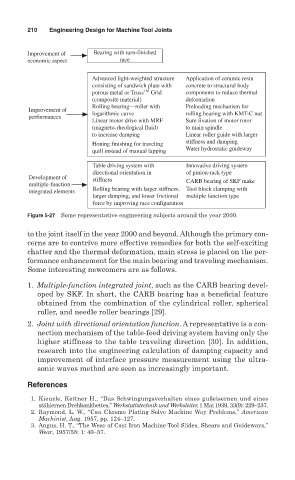
               Figure 5-27 Some representative engineering subjects around the year 2000.

               to the joint itself in the year 2000 and beyond. Although the primary con-
               cerns are to contrive more effective remedies for both the  self-exciting
               chatter and the thermal deformation, main stress is placed on the per-
               formance enhancement for the main bearing and traveling mechanism.
               Some interesting newcomers are as follows.

               1. Multiple-function integrated joint, such as the CARB bearing devel-
                  oped by SKF. In short, the CARB bearing has a beneficial feature
                  obtained from the combination of the cylindrical roller, spherical
                  roller, and needle roller bearings [29].
               2. Joint with directional orientation function. A representative is a con-
                  nection mechanism of the table-feed driving system having only the
                  higher stiffness to the table traveling direction [30]. In addition,
                  research into the engineering calculation of damping capacity and
                  improvement of interface pressure measurement using the ultra-
                  sonic waves method are seen as increasingly important.
               References

                1. Kienzle, Kettner H., “Das Schwingungsverhalten eines gußeisernen und eines
                  stählernen Drehbankbettes,” Werkstattstechnik und Werksleiter, 1 Mai 1939, 33(9): 229–237.
                2. Raymond, L. W., “Can Chrome Plating Solve Machine Way Problems,” American
                  Machinist, Aug. 1957, pp. 124–127.
                3. Angus, H. T., “The Wear of Cast Iron Machine Tool Slides, Shears and Guideways,”
                  Wear, 1957/58; 1: 40–57.

