


Page 300 - Modular design for machine tools
P. 300
Engineering Design Fundamentals and Single Flat Joint Characteristics        259


                  40                    Tellus          400
                                        (Redwood 320 s at 22°C)
                                        Saxonal grease
                  36                    Vitrea oil      360
                                        (Redwood 4750 s at 22°C)
                  32                    Dry             320
                 Joint stiffness 10 6 lbf/in  24        240
                                                        280
                  28
                                                        200
                  20
                                                        160
                  16
                  12
                                                         80
                   8                                    120
                   4             Shaped                  40              Scraped
                                temp. 25°C                             temp. 27.5°C
                   0                                      0
                    75 125 188  250  312  375              75 125  188  250  312 375
                       Joint preload, lbf/in 2                 Joint preload, lbf/in 2
                                                                             2
                    Note: Change in magnitude of joint stiffness axis. Mild steel, frequency 90 Hz, area 36 in .
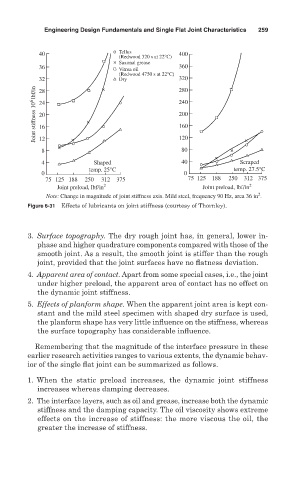
               Figure 6-31 Effects of lubricants on joint stiffness (courtesy of Thornley).


               3. Surface topography. The dry rough joint has, in general, lower  in-
                  phase and higher quadrature components compared with those of the
                  smooth joint. As a result, the smooth joint is stiffer than the rough
                  joint, provided that the joint surfaces have no flatness deviation.
               4. Apparent area of contact. Apart from some special cases, i.e., the joint
                  under higher preload, the apparent area of contact has no effect on
                  the dynamic joint stiffness.
               5. Effects of planform shape. When the apparent joint area is kept con-
                  stant and the mild steel specimen with shaped dry surface is used,
                  the planform shape has very little influence on the stiffness, whereas
                  the surface topography has considerable influence.

                 Remembering that the magnitude of the interface pressure in these
               earlier research activities ranges to various extents, the dynamic behav-
               ior of the single flat joint can be summarized as follows.

               1. When the static preload increases, the dynamic joint stiffness
                  increases whereas damping decreases.
               2. The interface layers, such as oil and grease, increase both the dynamic
                  stiffness and the damping capacity. The oil viscosity shows extreme
                  effects on the increase of stiffness: the more viscous the oil, the
                  greater the increase of stiffness.

