


Page 209 - Multidimensional Chromatography
P. 209
202                                       Multidimensional Chromatography


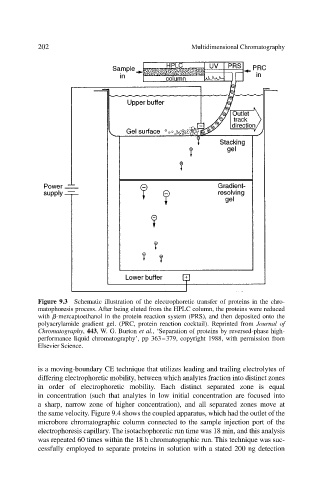
                           Figure 9.3 Schematic illustration of the electrophoretic transfer of proteins in the chro-
                           matophoresis process. After being eluted from the HPLC column, the proteins were reduced
                           with  -mercaptoethanol in the protein reaction system (PRS), and then deposited onto the
                           polyacrylamide gradient gel. (PRC, protein reaction cocktail). Reprinted from  Journal of
                           Chromatography, 443, W. G. Burton et al., ‘Separation of proteins by reversed-phase high-
                           performance liquid chromatography’, pp 363–379, copyright 1988, with permission from
                           Elsevier Science.


                           is a moving-boundary CE technique that utilizes leading and trailing electrolytes of
                           differing electrophoretic mobility, between which analytes fraction into distinct zones
                           in order of electrophoretic mobility. Each distinct separated zone is equal
                           in concentration (such that analytes in low initial concentration are focused into
                           a sharp, narrow zone of higher concentration), and all separated zones move at
                           the same velocity. Figure 9.4 shows the coupled apparatus, which had the outlet of the
                           microbore chromatographic column connected to the sample injection port of the
                           electrophoresis capillary. The isotachophoretic run time was 18 min, and this analysis
                           was repeated 60 times within the 18 h chromatographic run. This technique was suc-
                           cessfully employed to separate proteins in solution with a stated 200 ng detection

