


Page 536 - Book Hosokawa Nanoparticle Technology Handbook
P. 536
APPLICATIONS                                                22 DEVELOPMENT OF PHOTONIC CRYSTALS
                                                                 diamond lattice made of silica spheres left after the
                                    1                  2
                                                                 plasma process.  The disappearance of alternative
                                                                 spheres is easily recognized at the lowest row.
                                                                  The optical properties of systems made of micros-
                                                                 pheres are extensively studied only for both extreme
                                                                 situations of isolated single spheres and periodical
                                                                 array of infinite spheres. In contrast, the intermediate
                                    4                   3
                                                                 systems between these two extremes have hardly
                                                                 been investigated. Since the nanoparticle assembly
                                                                 technique enables systematic experiments by varying
                                                                 the number of the arranged spheres, it has been uti-
                                                                 lized for the investigation of the intermediate
                                                                 domains [16, 17].
                                                                  Furthermore, stacking of plates is possible as well
                                                                 [18]. Though the manipulation is currently carried out
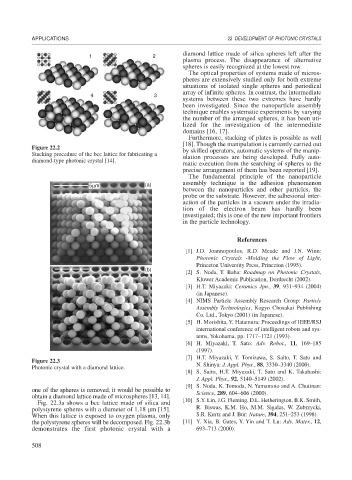
                  Figure 22.2                                    by skilled operators, automatic systems of the manip-
                  Stacking procedure of the bcc lattice for fabricating a  ulation processes are being developed. Fully auto-
                  diamond-type photonic crystal [14].
                                                                 matic execution from the searching of spheres to the
                                                                 precise arrangement of them has been reported [19].
                                                                  The fundamental principle of the nanoparticle
                                                                 assembly technique is the adhesion phenomenon
                                    5μm              (a)
                                                                 between the nanoparticles and other particles, the
                                                                 probe or the substrate. However, the adhesional inter-
                                                                 action of the particles in a vacuum under the irradia-
                                                                 tion of the electron beam has hardly been
                                                                 investigated; this is one of the new important frontiers
                                                                 in the particle technology.

                                                                                 References

                                                                 [1] J.D. Joannopoulos, R.D. Meade and J.N.  Winn:
                                                                     Photonic Crystals -Molding the Flow of Light,
                                                                     Princeton University Press, Princeton (1995).
                                                     (b)
                                                                 [2] S. Noda,  T. Baba:  Roadmap on Photonic Crystals,
                                                                     Kluwer Academic Publication, Dordrecht (2002).
                                                                 [3] H.T. Miyazaki:  Ceramics Jpn.,  39, 931–934 (2004)
                                                                     (in Japanese).
                                                                 [4] NIMS Particle  Assembly Research Group:  Particle
                                                                     Assembly Technologies, Kogyo Chosakai Publishing
                                                                     Co. Ltd., Tokyo (2001) (in Japanese).
                                                                 [5] H. Morishita, Y. Hatamura: Proceedings of IEEE/RSJ
                                                                     international conference of intelligent robots and sys-
                                                                     tems, Yokohama, pp. 1717–1721 (1993).
                                                                 [6] H. Miyazaki,  T. Sato:  Adv. Robot.,  11, 169–185
                                                                     (1997).
                                                                 [7] H.T. Miyazaki, Y.  Tomizawa, S. Saito,  T. Sato and
                  Figure 22.3
                  Photonic crystal with a diamond lattice.           N. Shinya: J. Appl. Phys., 88, 3330–3340 (2000).
                                                                 [8] S. Saito, H.T. Miyazaki, T. Sato and K. Takahashi:
                                                                     J. Appl. Phys., 92, 5140–5149 (2002).
                                                                 [9] S. Noda, K. Tomoda, N. Yamamoto and A. Chutinan:
                  one of the spheres is removed, it would be possible to  Science, 289, 604–606 (2000).
                  obtain a diamond lattice made of microspheres [13, 14].
                    Fig. 22.3a shows a bcc lattice made of silica and  [10] S.Y. Lin, J.G. Fleming, D.L. Hetherington, B.K. Smith,
                  polystyrene spheres with a diameter of 1.18  m [15].  R. Biswas, K.M. Ho, M.M. Sigalas,  W. Zubrzycki,
                  When this lattice is exposed to oxygen plasma, only  S.R. Kurtz and J. Bur: Nature, 394, 251–253 (1998).
                  the polystyrene spheres will be decomposed. Fig. 22.3b  [11] Y. Xia, B. Gates, Y. Yin and T. Lu: Adv. Mater., 12,
                  demonstrates the first photonic crystal with a     693–713 (2000).

                  508

