


Page 188 - New Trends In Coal Conversion
P. 188
Technologies for control of sulfur and nitrogen compounds and particulates  151


                                                               Wellman-lord process
                                              Wet processes
                                                               DESONOX process
                              Regeneration
                               processes
                                              Dry processes   Activated carbon process


               Flue-gas
             desulfuration
              processes
                                              Dry processes     Sorbent injection

                            Non-regenerative   Semi-dry
                                                              Spray-dryer absorption
                               processes       processes
                                                              Lime (stone) scrubbing
                                                               Sodium (hydroxide)
                                                                  scrubbing
                                                               Ammonia scrubbing
                                                 Wet            Hydrogen peroxide
                                               processes          scrubbing
                                                                   Seawater

                                                                  Dual alkali
                                                                   Others
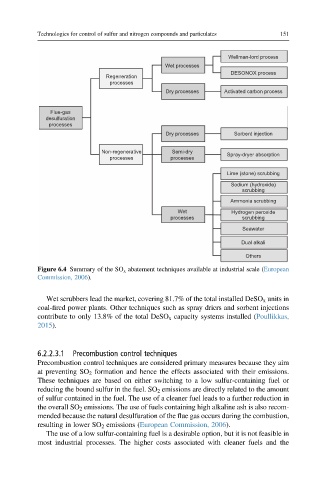
           Figure 6.4 Summary of the SO x abatement techniques available at industrial scale (European
           Commission, 2006).


              Wet scrubbers lead the market, covering 81.7% of the total installed DeSO x units in
           coal-fired power plants. Other techniques such as spray driers and sorbent injections
           contribute to only 13.8% of the total DeSO x capacity systems installed (Poullikkas,
           2015).


           6.2.2.3.1 Precombustion control techniques
           Precombustion control techniques are considered primary measures because they aim
           at preventing SO 2 formation and hence the effects associated with their emissions.
           These techniques are based on either switching to a low sulfur-containing fuel or
           reducing the bound sulfur in the fuel. SO 2 emissions are directly related to the amount
           of sulfur contained in the fuel. The use of a cleaner fuel leads to a further reduction in
           the overall SO 2 emissions. The use of fuels containing high alkaline ash is also recom-
           mended because the natural desulfuration of the flue gas occurs during the combustion,
           resulting in lower SO 2 emissions (European Commission, 2006).
              The use of a low sulfur-containing fuel is a desirable option, but it is not feasible in
           most industrial processes. The higher costs associated with cleaner fuels and the

