


Page 317 - Optical Communications Essentials
P. 317
Network Management


                                                                       Network Management  307


                                  Network Management System (NMS)
                                   Network Management System (NMS)

                       Network
                      management  Element Management System (EMS)  MIB
                                   Element Management System (EMS)
                                                                MIB
                       console
                        Optical
                       network           Supervisory links
                                                OADM

                             Transceivers  Amplifiers   Transceivers

                                        Managed elements
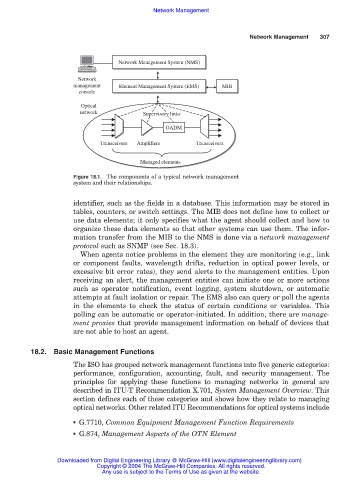
                      Figure 18.1. The components of a typical network management
                      system and their relationships.

                      identifier, such as the fields in a database. This information may be stored in
                      tables, counters, or switch settings. The MIB does not define how to collect or
                      use data elements; it only specifies what the agent should collect and how to
                      organize these data elements so that other systems can use them. The infor-
                      mation transfer from the MIB to the NMS is done via a network management
                      protocol such as SNMP (see Sec. 18.3).
                        When agents notice problems in the element they are monitoring (e.g., link
                      or component faults, wavelength drifts, reduction in optical power levels, or
                      excessive bit error rates), they send alerts to the management entities. Upon
                      receiving an alert, the management entities can initiate one or more actions
                      such as operator notification, event logging, system shutdown, or automatic
                      attempts at fault isolation or repair. The EMS also can query or poll the agents
                      in the elements to check the status of certain conditions or variables. This
                      polling can be automatic or operator-initiated. In addition, there are manage-
                      ment proxies that provide management information on behalf of devices that
                      are not able to host an agent.

          18.2. Basic Management Functions
                      The ISO has grouped network management functions into five generic categories:
                      performance, configuration, accounting, fault, and security management. The
                      principles for applying these functions to managing networks in general are
                      described in ITU-T Recommendation X.701, System Management Overview. This
                      section defines each of these categories and shows how they relate to managing
                      optical networks. Other related ITU Recommendations for optical systems include

                      ■ G.7710, Common Equipment Management Function Requirements
                      ■ G.874, Management Aspects of the OTN Element


                 Downloaded from Digital Engineering Library @ McGraw-Hill (www.digitalengineeringlibrary.com)
                            Copyright © 2004 The McGraw-Hill Companies. All rights reserved.
                              Any use is subject to the Terms of Use as given at the website.

