


Page 496 - Refining Biomass Residues for Sustainable Energy and Bioproducts
P. 496
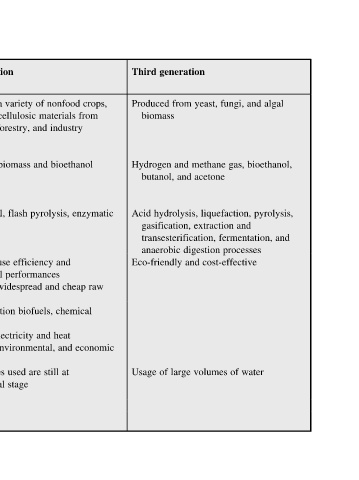
algal      bioethanol,  pyrolysis,  and
                    and                   and  fermentation,        water
                    fungi,     gas,     liquefaction,  processes  cost-effective  of

                    yeast,     methane  acetone  extraction  digestion  volumes
              generation  from  and  and  hydrolysis,  gasification,  transesterification,  and  large  of


              Third  Produced  biomass  Hydrogen  butanol,  Acid  anaerobic  Eco-friendly  Usage


                    crops,  from        enzymatic    raw        economic


                    nonfood  materials  industry  bioethanol  and  cheap  and  chemical  heat  and  at  still


                    of   and   and      pyrolysis,  efficiency  performances  biofuels,  and  are
                    variety  lignocellulosic  forestry,  biomass  flash  widespread  electricity  environmental,  used  stage
              generation  a  from  from          land-use  environmental  of  coproduction  of  energy,  performances  residues  precommercial


              Second  Produced  as  such  agricultural,  diesel  FT  Thermochemical,  Improved  Availability  material  Allow  compounds  Generation  Better  Biomass


                    starch,  fats  animal  wheat,  and  starch-  biomethanol,  energy  feed  biomass  implication  price

                    sugar,  or  are  seeds  biodiesel,  digestion  warming  fossil  and  food  of  use  land  ethical  fuel
              generation  from  oil, vegetable  stocks  feed  rape  and  biogas,  oils, vegetable  boaters  global  and emissions  consumption  with  for industries  agricultural  to  rise  fossil


          generations.  First  Produced  Basic  corn,  grains  Bioethanol,  derived  and  Anaerobic  Reduced  Compete  and  Give  Increased


          Biofuel     source   type     Conversion  Advantages      Disadvantages


          20.1      Biomass    Biofuel    route                                  FT, Fischer Tropsch.
          Table  S.  no.  1.   2.       3.       4.                 5.

