


Page 498 - Refining Biomass Residues for Sustainable Energy and Bioproducts
P. 498
Marine biomass toward biofuel production                          455


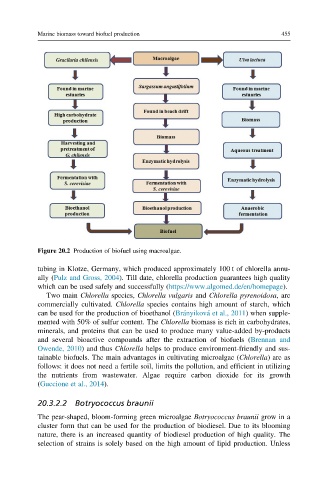
           Figure 20.2 Production of biofuel using macroalgae.

           tubing in Klotze, Germany, which produced approximately 100 t of chlorella annu-
           ally (Pulz and Gross, 2004). Till date, chlorella production guarantees high quality
           which can be used safely and successfully (https://www.algomed.de/en/homepage).
              Two main Chlorella species, Chlorella vulgaris and Chlorella pyrenoidosa, are
           commercially cultivated. Chlorella species contains high amount of starch, which
           can be used for the production of bioethanol (Bra ´nyikova ´ et al., 2011) when supple-
           mented with 50% of sulfur content. The Chlorella biomass is rich in carbohydrates,
           minerals, and proteins that can be used to produce many value-added by-products
           and several bioactive compounds after the extraction of biofuels (Brennan and
           Owende, 2010) and thus Chlorella helps to produce environment-friendly and sus-
           tainable biofuels. The main advantages in cultivating microalgae (Chlorella) are as
           follows: it does not need a fertile soil, limits the pollution, and efficient in utilizing
           the nutrients from wastewater. Algae require carbon dioxide for its growth
           (Guccione et al., 2014).


           20.3.2.2 Botryococcus braunii
           The pear-shaped, bloom-forming green microalgae Botryococcus braunii grow in a
           cluster form that can be used for the production of biodiesel. Due to its blooming
           nature, there is an increased quantity of biodiesel production of high quality. The
           selection of strains is solely based on the high amount of lipid production. Unless

