


Page 549 - Refining Biomass Residues for Sustainable Energy and Bioproducts
P. 549
Bioconversion of marine waste biomass for biofuel and value-added products recovery  497


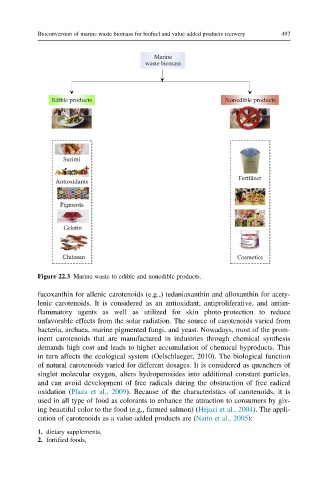
           Figure 22.3 Marine waste to edible and nonedible products.

           fucoxanthin for allenic carotenoids (e.g.,) tedaniaxanthin and alloxanthin for acety-
           lenic carotenoids. It is considered as an antioxidant, antiproliferative, and antiin-
           flammatory agents as well as utilized for skin photo-protection to reduce
           unfavorable effects from the solar radiation. The source of carotenoids varied from
           bacteria, archaea, marine pigmented fungi, and yeast. Nowadays, most of the prom-
           inent carotenoids that are manufactured in industries through chemical synthesis
           demands high cost and leads to higher accumulation of chemical byproducts. This
           in turn affects the ecological system (Oelschlaeger, 2010). The biological function
           of natural carotenoids varied for different dosages. It is considered as quenchers of
           singlet molecular oxygen, alters hydroperoxides into additional constant particles,
           and can avoid development of free radicals during the obstruction of free radical
           oxidation (Plaza et al., 2009). Because of the characteristics of carotenoids, it is
           used in all type of food as colorants to enhance the attraction to consumers by giv-
           ing beautiful color to the food (e.g., farmed salmon) (Hejazi et al., 2004). The appli-
           cation of carotenoids as a value-added products are (Naito et al., 2005):
           1. dietary supplements,
           2. fortified foods,

