


Page 219 - Robotics Designing the Mechanisms for Automated Machinery
P. 219
6.2 Linear Transportation                      207

           • Maintaining constant tension (in the paper, fabric, wire, threads, etc., that are
              handled);
           • Maintaining constant speed of the running material;
           • Handling the problem of stretching of some materials during their processing
              (thermal treatment, humidity and drying, plastic deformation, etc.);
           • Maintaining a constant rate of consumption of the transported material. (This
              is close to, although not exactly the same as, keeping the speed constant.)

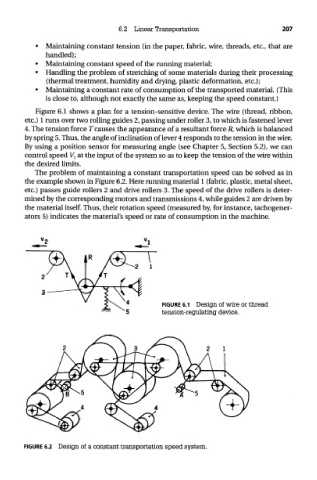
           Figure 6.1 shows a plan for a tension-sensitive device. The wire (thread, ribbon,
        etc.) 1 runs over two rolling guides 2, passing under roller 3, to which is fastened lever
        4. The tension force T causes the appearance of a resultant force R, which is balanced
        by spring 5. Thus, the angle of inclination of lever 4 responds to the tension in the wire.
        By using a position sensor for measuring angle (see Chapter 5, Section 5.2), we can
        control speed V 1 at the input of the system so as to keep the tension of the wire within
        the desired limits.
           The problem of maintaining a constant transportation speed can be solved as in
        the example shown in Figure 6.2. Here running material 1 (fabric, plastic, metal sheet,
        etc.) passes guide rollers 2 and drive rollers 3. The speed of the drive rollers is deter-
        mined by the corresponding motors and transmissions 4, while guides 2 are driven by
        the material itself. Thus, their rotation speed (measured by, for instance, tachogener-
        ators 5) indicates the material's speed or rate of consumption in the machine.


                                               FIGURE 6.1 Design of wire or thread
                                               tension-regulating device.


        FIGURE 6.2 Design of a constant transportation speed system.

