


Page 224 - Sedimentology and Stratigraphy
P. 224
Estuaries   211


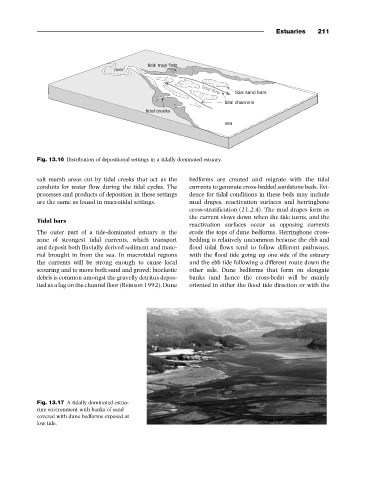
                 Fig. 13.16 Distribution of depositional settings in a tidally dominated estuary.

                 salt marsh areas cut by tidal creeks that act as the  bedforms are created and migrate with the tidal
                 conduits for water flow during the tidal cycles. The  currents to generate cross-bedded sandstone beds. Evi-
                 processes and products of deposition in these settings  dence for tidal conditions in these beds may include
                 are the same as found in macrotidal settings.  mud drapes, reactivation surfaces and herringbone
                                                              cross-stratification (11.2.4). The mud drapes form as
                                                              the current slows down when the tide turns, and the
                 Tidal bars
                                                              reactivation surfaces occur as opposing currents
                 The outer part of a tide-dominated estuary is the  erode the tops of dune bedforms. Herringbone cross-
                 zone of strongest tidal currents, which transport  bedding is relatively uncommon because the ebb and
                 and deposit both fluvially derived sediment and mate-  flood tidal flows tend to follow different pathways,
                 rial brought in from the sea. In macrotidal regions  with the flood tide going up one side of the estuary
                 the currents will be strong enough to cause local  and the ebb tide following a different route down the
                 scouring and to move both sand and gravel: bioclastic  other side. Dune bedforms that form on elongate
                 debris is common amongst the gravelly detritus depos-  banks (and hence the cross-beds) will be mainly
                 ited as a lag on the channel floor (Reinson 1992). Dune  oriented in either the flood tide direction or with the


                 Fig. 13.17 A tidally dominated estua-
                 rine environment with banks of sand
                 covered with dune bedforms exposed at
                 low tide.

