


Page 221 - Sedimentology and Stratigraphy
P. 221
208    Clastic Coasts and Estuaries


                                                              valleys have become flooded and these provide a
                                                              spectrum of morphologies and process controls that
                                                              can be used to construct models for estuarine sedi-
                                                              mentation. Two end members are recognised (Dal-
                                                              rymple et al. 1992): wave-dominated estuaries
                                                              and tide-dominated estuaries, with a range of inter-
                                                              mediate forms in between. In addition to these two
                                                              basic process controls, the volume of the sediment
                                                              supply and the relative importance of supply from
                                                              marine and fluvial sources also play an important
                                                              role in determining the facies distributions in an
                                                              estuarine succession. The extent of estuarine deposits
                                                              will depend upon the size of the valley and the depth
                                                              to which it has been flooded. Modern estuaries range
                                                              from a few kilometres to over 100 km long and from
                                                              a few hundred metres to over 10 km wide. The thick-
                                                              ness of the succession formed by filling an estuary is
                                                              typically tens of metres.
                                                                Sedimentation in an estuary will eventually result
                                                              in the drowned valley filling to sea level and, unless
                                                              there is further sea-level rise, the area will cease to
                                                              have an estuarine character. If there is a high rate of
                                                              fluvial sediment supply, deposition will start to occur
                                                              at the mouth of the river and a delta will start to form.
                                                              Under conditions where the marine processes are
                                                              dominant, the river mouth will become an area of
                                                              tidal flats if tidal currents are strong, or the sediment
                                                              will be reworked and redistributed by wave processes
                                                              to form a strand plain. An estuary is therefore a
                                                              temporary morphological feature, existing only dur-
                                                              ing and immediately after transgression while sedi-
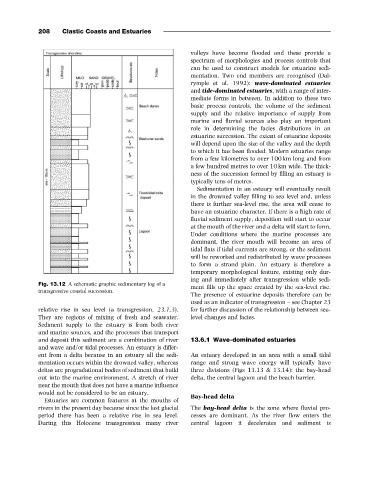
                  Fig. 13.12 A schematic graphic sedimentary log of a
                                                              ment fills up the space created by the sea-level rise.
                  transgressive coastal succession.
                                                              The presence of estuarine deposits therefore can be
                                                              used as an indicator of transgression – see Chapter 23
                  relative rise in sea level (a transgression, 23.1.3).  for further discussion of the relationship between sea-
                  They are regions of mixing of fresh and seawater.  level changes and facies.
                  Sediment supply to the estuary is from both river
                  and marine sources, and the processes that transport
                  and deposit this sediment are a combination of river  13.6.1 Wave-dominated estuaries
                  and wave and/or tidal processes. An estuary is differ-
                  ent from a delta because in an estuary all the sedi-  An estuary developed in an area with a small tidal
                  mentation occurs within the drowned valley, whereas  range and strong wave energy will typically have
                  deltas are progradational bodies of sediment that build  three divisions (Figs 13.13 & 13.14): the bay-head
                  out into the marine environment. A stretch of river  delta, the central lagoon and the beach barrier.
                  near the mouth that does not have a marine influence
                  would not be considered to be an estuary.
                                                              Bay-head delta
                    Estuaries are common features at the mouths of
                  rivers in the present day because since the last glacial  The bay-head delta is the zone where fluvial pro-
                  period there has been a relative rise in sea level.  cesses are dominant. As the river flow enters the
                  During this Holocene transgression many river  central lagoon it decelerates and sediment is

