


Page 216 - Sedimentology and Stratigraphy
P. 216
Barrier and Lagoon Systems   203


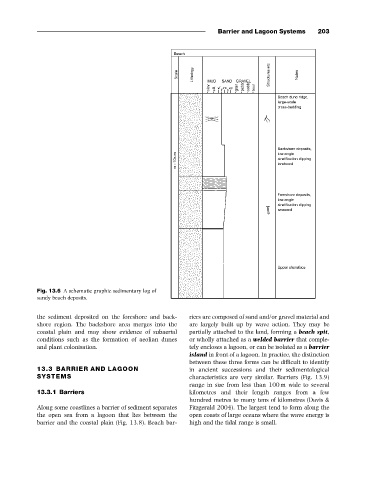
                 Fig. 13.6 A schematic graphic sedimentary log of
                 sandy beach deposits.


                 the sediment deposited on the foreshore and back-  riers are composed of sand and/or gravel material and
                 shore region. The backshore area merges into the  are largely built up by wave action. They may be
                 coastal plain and may show evidence of subaerial  partially attached to the land, forming a beach spit,
                 conditions such as the formation of aeolian dunes  or wholly attached as a welded barrier that comple-
                 and plant colonisation.                      tely encloses a lagoon, or can be isolated as a barrier
                                                              island in front of a lagoon. In practice, the distinction
                                                              between these three forms can be difficult to identify
                 13.3 BARRIER AND LAGOON                      in ancient successions and their sedimentological
                 SYSTEMS                                      characteristics are very similar. Barriers (Fig. 13.9)
                                                              range in size from less than 100 m wide to several
                 13.3.1 Barriers                              kilometres and their length ranges from a few
                                                              hundred metres to many tens of kilometres (Davis &
                 Along some coastlines a barrier of sediment separates  Fitzgerald 2004). The largest tend to form along the
                 the open sea from a lagoon that lies between the  open coasts of large oceans where the wave energy is
                 barrier and the coastal plain (Fig. 13.8). Beach bar-  high and the tidal range is small.

