


Page 258 - Semiconductor Manufacturing Handbook
P. 258
Geng(SMH)_CH17.qxd  04/04/2005  19:58  Page 17.13


                                                  CHEMICAL MECHANICAL POLISHING

                                                                          CHEMICAL MECHANICAL POLISHING  17.13

                                                                            Pressure
                                                                             gauge
                                                                                     Pressure
                                                                               P
                                                                                      gauge
                                                                                       P  Flow
                                                                                          valve
                                                          Flow meter
                                                                                     Filtration
                                                                                     element
                                               Heat
                                             exchanger                                     Permeate
                                                                               Flow
                                                                              valve
                                                                                         Pressure
                                                                                      P
                                                                                          gauge
                                                      Flow                           Valve
                                                      valve           Feed
                                                                      tank         Drain

                                         Centrifugal pump

                                                   The pH of the sample was adjusted manually prior to solids removal
                                                   with the ceramic membranes.
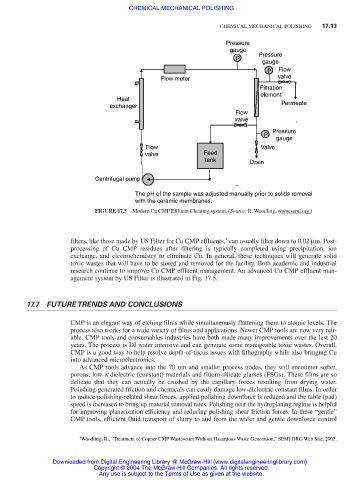
                                         FIGURE 17.5 Modern Cu CMP Effluent Cleaning system. (Source: R. Woodling, www.semi.org.)


                                                                            *
                                  filters, like those made by US Filter for Cu CMP effluents, can usually filter down to 0.02 µm. Post-
                                  processing of Cu CMP residues after filtering is typically completed using precipitation, ion
                                  exchange, and electrochemistry to eliminate Cu. In general, these techniques will generate solid
                                  toxic wastes that will have to be stored and removed for the facility. Both academic and industrial
                                  research continue to improve Cu CMP effluent management. An advanced Cu CMP effluent man-
                                  agement system by US Filter is illustrated in Fig. 17.5.


                      17.7 FUTURE TRENDS AND CONCLUSIONS

                                  CMP is an elegant way of etching films while simultaneously flattening them to atomic levels. The
                                  process also works for a wide variety of films and applications. Newer CMP tools are now very reli-
                                  able. CMP tools and consumables industries have both made many improvements over the last 20
                                  years. The process is DI water intensive and can generate some manageable toxic wastes. Overall,
                                  CMP is a good way to help resolve depth-of-focus issues with lithography while also bringing Cu
                                  into advanced microelectronics.
                                    As CMP tools advance into the 70 nm and smaller process nodes, they will encounter softer,
                                  porous, low-k dielectric (constant) materials and fluoro-silicate glasses (FSGs). These films are so
                                  delicate that they can actually be crushed by the capillary forces resulting from drying water.
                                  Polishing-generated friction and chemicals can easily damage low-dielectric constant films. In order
                                  to reduce polishing-related shear forces, applied polishing downforce is reduced and the table (pad)
                                  speed is increased to bring up material removal rates. Polishing near the hydroplaning regime is helpful
                                  for improving planarization efficiency and reducing polishing shear friction forces. In these “gentle”
                                  CMP tools, efficient fluid transport of slurry to and from the wafer and gentle downforce control

                                    * Woodling, R., “Treatment of Copper CMP Wastewater Without Hazardous Waste Generation,” SEMI.ORG Web Site, 2003.


                             Downloaded from Digital Engineering Library @ McGraw-Hill (www.digitalengineeringlibrary.com)
                                        Copyright © 2004 The McGraw-Hill Companies. All rights reserved.
                                          Any use is subject to the Terms of Use as given at the website.

