


Page 350 -
P. 350
CHAPTER 12  ANALYSIS MODELING                                      321

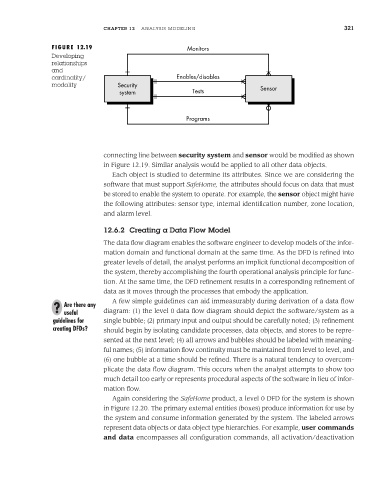
               FIGURE 12.19                          Monitors
               Developing
               relationships
               and
               cardinality/                       Enables/disables
               modality           Security                               Sensor
                                  system              Tests


                                                     Programs


                              connecting line between security system and sensor would be modified as shown
                              in Figure 12.19. Similar analysis would be applied to all other data objects.
                                Each object is studied to determine its attributes. Since we are considering the
                              software that must support SafeHome, the attributes should focus on data that must
                              be stored to enable the system to operate. For example, the sensor object might have
                              the following attributes: sensor type, internal identification number, zone location,
                              and alarm level.


                              12.6.2 Creating a Data Flow Model
                              The data flow diagram enables the software engineer to develop models of the infor-
                              mation domain and functional domain at the same time. As the DFD is refined into
                              greater levels of detail, the analyst performs an implicit functional decomposition of
                              the system, thereby accomplishing the fourth operational analysis principle for func-
                              tion. At the same time, the DFD refinement results in a corresponding refinement of
                              data as it moves through the processes that embody the application.
                                A few simple guidelines can aid immeasurably during derivation of a data flow
                ?  Are there any  diagram: (1) the level 0 data flow diagram should depict the software/system as a
                   useful
                guidelines for  single bubble; (2) primary input and output should be carefully noted; (3) refinement
                creating DFDs?  should begin by isolating candidate processes, data objects, and stores to be repre-
                              sented at the next level; (4) all arrows and bubbles should be labeled with meaning-
                              ful names; (5) information flow continuity must be maintained from level to level, and
                              (6) one bubble at a time should be refined. There is a natural tendency to overcom-
                              plicate the data flow diagram. This occurs when the analyst attempts to show too
                              much detail too early or represents procedural aspects of the software in lieu of infor-
                              mation flow.
                                Again considering the SafeHome product, a level 0 DFD for the system is shown
                              in Figure 12.20. The primary external entities (boxes) produce information for use by
                              the system and consume information generated by the system. The labeled arrows
                              represent data objects or data object type hierarchies. For example, user commands
                              and data encompasses all configuration commands, all activation/deactivation

